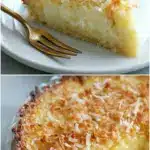
My grandmother used to make an impossible coconut pie every Sunday, swearing the kitchen fairies formed the crust while she sat drinking coffee. As a kid, I’d press my nose against the oven glass, watching the batter sink and the golden crust rise completely on its own. It felt like pure kitchen sorcery. I had to know how it worked.
If you’ve ever struggled with a gummy center or a soggy bottom on a crustless coconut custard pie, this recipe fixes that. The trick is a precise ratio of flour to fat, which gives you a tender base and a perfectly set custard every single time.
I’ll walk you through the science behind the self-crusting trick, a tested substitutions table for dietary swaps, and the exact resting time needed for clean, bakery-style slices.
Table of Contents
The Science Behind the Self-Crusting Magic
When you pour a thin batter into a hot pie dish and slide it into the oven, you expect a pancake or a clafoutis. Instead, you get an impossible coconut pie. The batter separates into three distinct layers as it bakes: a base that mimics a shortcrust pastry, a center that turns into a rich custard, and a top that caramelizes into a chewy coconut crust. It is not magic, but rather a clever manipulation of density and heat.
The heavy ingredients, specifically the melted butter and milk, sink to the bottom of the dish during the first few minutes in the oven. The flour acts as a binder, absorbing those fats and gelatinizing into a dense layer that resembles a crust. Meanwhile, the eggs, sugar, and lighter coconut shreds remain suspended in the liquid, setting into a smooth, sweet custard above the crust. As moisture evaporates, the toasted coconut shreds rise to the surface, creating a beautifully browned top.
For this coconut impossible pie recipe to work correctly, the batter must be extremely thin when you pour it into the baking dish. If the batter is too thick, the flour will not sink properly, and you will end up with a dense, gummy texture throughout. Blending the wet ingredients helps the flour disperse evenly without overmixing, which would create gluten and toughen the texture.
Using room temperature ingredients also helps the separation process. If you pour cold milk and chilled eggs into a hot baking dish, the temperature shock causes the fats to seize unevenly. By starting with room temperature eggs and melted butter, you create a cohesive liquid that responds gently to the oven heat. The result is an impossibly easy coconut pie that looks like you spent an hour rolling and crimping dough.
If you appreciate desserts that manage their own structural elements, you might also enjoy our baby lemon impossible pie. It uses the same fluid batter technique to produce a bright, tangy custard without requiring a traditional pastry shell.
Print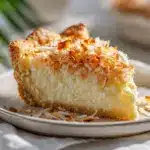
The Magic of Impossible Coconut Pie: A Self-Crusting Custard
- Total Time: 110 min
- Yield: 8 servings 1x
- Diet: Vegetarian
Description
This crustless coconut custard pie blends eggs, milk, flour, and shredded coconut into a thin batter that separates in the oven to form its own crust, custard, and toasted top layer. Serve it warm or at room temperature.
Ingredients
For the pie:
4 large eggs (room temperature)
1 cup whole milk (room temperature)
1 cup granulated sugar
1/2 cup unsalted butter (melted)
1 cup all-purpose flour
1 teaspoon vanilla extract
1/4 teaspoon salt
1 cup sweetened shredded coconut
1 tablespoon unsalted butter (for greasing the dish)
Instructions
1. Preheat your oven to 350 degrees F and place a 9-inch glass or ceramic pie dish inside with one tablespoon of butter to melt.
2. Combine the eggs, milk, sugar, vanilla extract, and salt in a blender and blend on medium speed for 15 seconds until smooth and pale.
3. Add the flour to the blender and pulse 5 times just until the flour disappears, stopping before overmixing develops gluten.
4. Remove the blender from the base and gently fold in the shredded coconut with a rubber spatula.
5. Carefully remove the hot pie dish from the oven and swirl the melted butter to coat the bottom and sides evenly.
6. Pour the batter directly into the center of the hot dish, listening for a faint sizzle as the liquid hits the hot fat.
7. Bake on the middle rack for 40 minutes until the top is deep golden brown and the center has a slight jiggle.
8. Let the pie rest at room temperature for 60 minutes so the custard sets completely before slicing.
Notes
Store in the refrigerator for up to 4 days or freezer for up to 2 months. Reheat at 300 degrees F for 5 minutes.
Use room temperature ingredients to ensure the batter separates correctly.
Do not over-blend the flour or the crust will become tough.
For a stronger coconut flavor, substitute the whole milk with canned full-fat coconut milk.
- Prep Time: 10 min
- Rest Time: 60 min
- Cook Time: 40 min
- Category: Dessert
- Method: Baking
- Cuisine: American
Nutrition
- Serving Size: 1 slice
- Calories: 285 kcal
- Sugar: 32 g
- Sodium: 180 mg
- Fat: 14 g
- Saturated Fat: 9 g
- Unsaturated Fat: 4 g
- Trans Fat: 0 g
- Carbohydrates: 36 g
- Fiber: 1 g
- Protein: 4 g
- Cholesterol: 110 mg
Essential Ingredients and Tested Substitutions
The beauty of a magic crustless coconut pie is its simplicity. You need eggs, sugar, flour, melted butter, milk, vanilla extract, salt, and shredded coconut. That is it. The eggs provide the structure for the custard layer, while the milk and butter create the rich foundation that sinks and gelatinizes into the crust.
The type of milk you choose drastically alters the final texture. Whole milk provides a classic, tender custard, but using canned coconut milk adds an intense tropical richness that makes the dessert taste like a cross between a coconut cream pie and a baked custard. If you want a prominent coconut flavor, use full-fat coconut milk and toast your coconut shreds before folding them into the batter.
Flour is the binding agent here. Standard all-purpose flour works best because it has a moderate protein content that gelatinizes without turning rubbery. If you need to make this recipe gluten-free, a one-to-one gluten-free baking blend works well, but the crust layer will be slightly more tender and less chewy than the original version.
During my testing, I tried several ingredient swaps to see how they affected the final bake. If you want to customize your impossible coconut pie, consult my tested substitutions table below. These changes will alter the texture and flavor, but they will still yield a delicious dessert.
| Swap | Use Instead | What Changes |
|---|---|---|
| Whole Milk | Canned full-fat coconut milk | Denser custard, stronger coconut flavor, softer crust |
| Sweetened Shredded Coconut | Unsweetened Toasted Coconut | Deeper nutty flavor, less sweet overall, slightly chewier top |
| All-Purpose Flour | 1-to-1 Gluten-Free Blend | Slightly crumbly crust, custard sets a bit softer, no gluten chew |
| Granulated Sugar | Dark Brown Sugar | Richer molasses flavor, darker crust, slightly denser bottom |
| Vanilla Extract | Coconut Extract | Amplifies tropical aroma, alters the classic custard flavor profile |
| Melted Butter | Melted Coconut Oil | Crisper crust edges, dairy-free profile, lighter custard body |
If you are looking for another way to use up extra shredded coconut, our coconut balls recipe is a no-bake option for sweet snacking.
Step-by-Step Blending and Baking Process
Making an impossible coconut pie requires exactly ten minutes of active prep time. The blender does the heavy lifting, and the oven does the baking. You want to avoid over-blending the batter once you add the flour, as too much agitation develops gluten and ruins the delicate texture of the crustless coconut custard pie.
First, preheat your oven to 350°F. Place a standard nine-inch glass or ceramic pie dish into the oven with one tablespoon of butter. Let the butter melt completely and coat the inside of the dish. This hot, greased dish is essential for helping the batter react the moment it touches the surface, which immediately starts the separation process.
In your blender, combine four large eggs, one cup of whole milk, one cup of granulated sugar, one teaspoon of vanilla extract, and a pinch of salt. Blend on medium speed for fifteen seconds until the mixture is completely smooth and pale yellow. You want to see a consistent color with no streaks of egg white floating on the surface.
Next, add one cup of all-purpose flour. Pulse the blender five or six times, just until the flour disappears into the liquid. Stop the blender the moment the flour is incorporated. You will see a few small lumps, which is perfectly fine. They will dissolve during the resting period.
Remove the blender from its base and use a rubber spatula to gently fold in one cup of sweetened shredded coconut. Do not blend the coconut. You want to keep the shreds intact so they can float to the top of the custard during baking.
Carefully remove the hot pie dish from the oven. Swirl the melted butter to coat the bottom and sides evenly. Pour the batter directly into the center of the hot dish. The batter should sizzle faintly when it hits the hot butter. This is exactly what you want to hear.
Bake the pie on the middle rack for 40 minutes. You will know it is done when the top is deep golden brown, the center is set but still has a slight jiggle, and your kitchen smells like toasted sugar and warm vanilla.
When you pull it out, the edges might puff up dramatically. They will deflate as the pie cools. This is a characteristic trait of a coconut impossible pie recipe. For a detailed look at handling tricky fillings, our guide to making a classic fish pie recipe offers tips on managing wet batters.
Pan Sizes and Cupcake Adaptations
You do not need a standard nine-inch pie dish to bake an impossible coconut pie. You can adapt this recipe to suit almost any baking vessel, but you must adjust the baking time and batter depth so the layers separate correctly. The magic relies on the batter being shallow enough for the heavy fats to sink and the coconut to rise.
A nine-inch pie dish is the standard because it creates the perfect ratio of crust to custard. If you use a deeper dish, the center will remain gummy and the layers will blur together. If you use a shallow tart pan, the crust will burn before the custard sets. Glass and ceramic dishes are ideal because they distribute heat evenly and allow you to monitor the browning of the bottom crust.
Many bakers ask if they can make this recipe into cupcakes. You absolutely can. Making a crustless coconut custard pie in a muffin tin creates individual portions that are perfect for brunches or packed lunches. Line a standard muffin tin with paper liners or grease it thoroughly.
Fill each cup only two-thirds full. If you fill them to the top, the batter will spill over the sides and fuse the portions together. Bake the mini pies at 350°F for 22 minutes. The edges will turn golden brown and pull away from the liners. Because they are smaller, they will not have as distinct a three-layer separation, but you will still get a dense base and a custardy top.
If you are serving a crowd and want another visually striking dessert, our strawberry chamomile naked cake is a beautiful centerpiece. It requires more effort than an impossible coconut pie, but it pairs wonderfully with coffee for a spring brunch.
Storage, Serving, and Sensory Details
An impossible coconut pie is best served slightly warm or at room temperature. If you slice into it while it is piping hot, the custard will run and the layers will collapse into a messy pool. You must let it rest at room temperature for at least one hour before slicing. This resting time is critical because it allows the custard to finish setting up and the crust to firm up at the base.
When you serve it, you will notice a distinct line where the golden top meets the pale custard. Press your fork through the crisp coconut top and feel it yield to the soft custard beneath. The bottom layer will offer a slight resistance, chewy and dense like a soft shortbread cookie. The flavor is sweet but not cloying, with a toasted coconut aroma that fills the room.
If you have leftovers, store them covered in the refrigerator. The cold temperature will firm up the custard completely, making the slices easy to grab for a quick breakfast or a midnight snack. To restore the crisp top, reheat individual slices in an air fryer at 300°F for three minutes. Microwaving is faster but makes the crust soggy.
This magic crustless coconut pie will keep in the refrigerator for up to four days. You can also freeze the entire baked pie for up to two months. Wrap it tightly in plastic wrap and then aluminum foil. Thaw it overnight in the refrigerator before reheating.
For those who love tropical flavors, pairing a slice of this pie with our creamy coconut mango smoothie makes for an incredible afternoon treat. The cold, fruity smoothie balances the warm, buttery notes of the baked custard beautifully.
Frequently Asked Questions
How do I serve this pie?
Serve this pie slightly warm or at room temperature after it has rested for at least an hour. You can dust the top with powdered sugar or add a dollop of whipped cream. A sprinkle of toasted coconut on top adds extra crunch and visual appeal.
How should Impossible Pie be stored?
Store any leftover slices covered in the refrigerator for up to four days. The custard will firm up significantly when chilled. To restore the chewy top layer, reheat individual portions in an air fryer or conventional oven at 300°F for three to five minutes.
What size pie pan should I use?
A standard nine-inch glass or ceramic pie dish works best for this recipe. This specific diameter and depth allow the batter to separate into the three distinct layers. A deeper dish will result in a gummy center, while a shallower tart pan will cause the crust to burn.
Can I make these into cupcakes?
Yes, you can bake this batter in a standard muffin tin to create individual portions. Fill each greased cup only two-thirds full and bake at 350°F for 22 minutes. The individual portions will not have as distinct a three-layer separation, but they will still taste delicious.
Why did my pie not form a crust?
The crust fails to form if the batter is too thick or if the ingredients are cold when mixed. You must use room temperature eggs and milk, and pour the thin batter into a hot, buttered pie dish. If the flour is over-mixed, it will stay suspended instead of sinking.
Can I use unsweetened coconut instead of sweetened?
Yes, you can use unsweetened coconut, but the overall pie will be less sweet. To compensate, you might want to add an extra tablespoon of sugar to the batter. Unsweetened coconut also toasts faster, so monitor the pie closely during the last ten minutes of baking.
Conclusion
The impossible coconut pie proves that a few simple ingredients can transform in the oven. The batter separates into a dense base, a soft custard, and a chewy coconut top without any rolling or crimping. This recipe turns the frustration of gummy centers and soggy bottoms into a reliable kitchen trick.
Bookmark this for your next Sunday dinner or a casual potluck where you want to impress without stress. Let the oven do the work while you enjoy your morning coffee.
For more recipes like impossible coconut pie, follow us on Facebook and Pinterest for weeknight dinner ideas.
More recipes in this series: