The first time I tried an oven seafood boil recipe, I was genuinely shocked at how the dry heat concentrated the flavors better than any stovetop pot.
Traditional boils often leave you with waterlogged shrimp and mushy corn that lost all its natural sweetness. By moving the entire process to a baking sheet, the butter roasts into the seafood rather than washing away.
Coming up: the exact timing method for snappy shrimp and clean-opening clams, how to layer your pan so nothing turns to mush, and the spice ratio that balances heat with buttery richness.
Table of Contents
Why the Oven Beats the Stovetop for Seafood Boils
When you think of a seafood boil, you probably picture a massive stockpot bubbling away on a propane burner in the backyard. Moving this feast indoors and into the oven changes the entire chemical process for the better. A traditional boil submerges your ingredients in water.
While this cooks the food, it also leaches flavor out into the surrounding liquid. When you bake a seafood boil, the dry heat of the oven surrounds the ingredients, concentrating the natural sugars in the corn and potatoes while the seasoned butter roasts directly into the shells. You end up with a depth of flavor that boiling simply cannot match.
Temperature control is the second major advantage. On a stovetop, the bottom of the pot is significantly hotter than the top. This uneven heat means your shrimp at the bottom overcook and turn rubbery while the potatoes at the top remain crunchily underdone.
An oven gives you consistent, even heat from every direction. Every piece of andouille sausage renders its fat evenly, and every clam gets the same treatment. They pop open at the same time.
And the cleanup is honestly the best part. A stovetop boil leaves you with a heavy pot of starchy water, spent spice sachets, and shells. An easy oven seafood boil leaves you with a single sheet pan. You can line it with heavy-duty aluminum foil or parchment paper for a virtually hands-off cleanup.
The butter and sausage drippings caramelize on the pan, creating a glaze that coats the seafood perfectly. If you love the flavors of a classic shrimp scampi recipe but want something heartier, this sheet pan method gives you that intense garlic and butter profile with the added satisfaction of potatoes and corn.
Print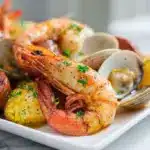
The Easiest Oven Seafood Boil Recipe You Will Ever Make
- Total Time: 38 min
- Yield: 5 servings 1x
Description
A sheet pan seafood boil featuring jumbo shrimp, little neck clams, andouille sausage, baby potatoes, and corn roasted in a spiced butter glaze. Staggered cooking times ensure tender potatoes and perfectly plump shrimp without the need for a large stockpot.
Ingredients
For the base:
1.5 lbs baby potatoes, halved
4 small ears corn on the cob, cut into 2-inch rounds
1 lb andouille sausage, sliced into thick coins
2 tbsp olive oil
1 tsp salt
For the seafood:
1.5 lbs jumbo shrimp (shell-on, deveined)
2 lbs little neck clams, scrubbed clean
For the spiced butter:
1 cup (2 sticks) unsalted butter
3 cloves garlic, minced
2 tbsp Cajun seasoning
1 tbsp Old Bay seasoning
1 tbsp sugar
1 lemon, juiced
Fresh parsley, chopped for garnish
Instructions
1. Preheat the oven to 400 degrees Fahrenheit and line a large sheet pan with heavy-duty aluminum foil.
2. Toss the halved baby potatoes, corn rounds, and sliced andouille sausage with olive oil, salt, and a dusting of Old Bay seasoning in a bowl.
3. Spread the potato, corn, and sausage mixture in a single layer on the prepared sheet pan and roast for 15 minutes until the potatoes begin to soften.
4. Melt the butter in a small saucepan over medium heat, then whisk in the minced garlic, Cajun seasoning, Old Bay, and sugar until smooth.
5. Remove the sheet pan from the oven and push the roasted vegetables to the sides to make room for the seafood.
6. Add the shrimp and scrubbed clams to the center of the pan, then pour the spiced butter mixture evenly over all the ingredients.
7. Return the pan to the oven and roast for another 12 to 15 minutes until the shrimp are pink and the clams have popped open.
8. Squeeze fresh lemon juice over the hot seafood and sprinkle with chopped parsley before serving directly from the pan.
Notes
Store in the refrigerator for up to 2 days. Reheat at 350 degrees Fahrenheit for 5 minutes.
Do not overcook the shrimp. Check the pan at 12 minutes as all ovens vary slightly.
Discard any clams that do not open after the full cooking time.
For extra heat, add a pinch of cayenne pepper to the spiced butter mixture.
- Prep Time: 8 min
- Cook Time: 30 min
- Category: Main Course
- Method: Baking
- Cuisine: American
Nutrition
- Serving Size: 1 plate
- Calories: 610 kcal
- Sugar: 5 g
- Sodium: 1450 mg
- Fat: 38 g
- Saturated Fat: 19 g
- Unsaturated Fat: 19 g
- Trans Fat: 0 g
- Carbohydrates: 29 g
- Fiber: 4 g
- Protein: 36 g
- Cholesterol: 245 mg
The Essential Ingredients for a Sheet Pan Seafood Boil
Building a great oven baked seafood boil requires balancing delicate proteins with sturdy vegetables. The goal is to choose items that will finish cooking at the same time. The foundation of any seafood boil is shrimp, clams, sausage, potatoes, and corn.
For the seafood, you want shell-on jumbo shrimp. The shells protect the meat from the dry oven heat. They keep the shrimp plump and juicy, and they trap the roasted butter right against the surface so it flavors every bite.
Little neck clams are the ideal bivalve here. They are small, tender, and cook quickly. When buying clams, tap any open ones on the counter; if they close, they are alive and safe. Discard any that remain open.
Andouille sausage provides a smoky, spicy backbone that cuts through the richness of the butter. Its firm texture holds up well to roasting, crisping on the exterior while staying juicy inside.
Baby potatoes are the best choice because their thin skins turn slightly crisp in the oven. Cut them in half so their starchy interiors soak up the spiced butter. For corn, small ears work best, but if you can only find large ones, cut them into thirds.
The seasoning comes down to Old Bay and Cajun spice. Old Bay brings a celery salt and paprika base, while Cajun seasoning adds a sharper garlic and cayenne kick.
You will also need a generous amount of unsalted butter, a pinch of sugar to help the butter caramelize, and some lemon wedges. If you want to explore other flavor profiles, you can swap the Cajun seasoning for a garlicky, sweet glaze using this Korean bbq sauce recipe for a fusion twist.
Tested Substitutions Table
| Swap | Use Instead | What Changes |
|---|---|---|
| Little neck clams | Mussels | Mussels cook faster, so add them 2 minutes later. They offer a slightly earthier flavor than clams. |
| Andouille sausage | Smoked kielbasa | Kielbasa is less spicy. The overall boil will have a milder, smokier profile rather than a Cajun kick. |
| Baby potatoes | Yukon gold chunks | Yukon golds are denser and take longer to cook. Cut them smaller to ensure they soften in time. |
| Corn on the cob | Frozen corn kernels | Kernels roast faster and absorb more butter directly. You lose the visual impact of whole cobs. |
| Jumbo shrimp | Scallops | Scallops cook in half the time and lack the shell flavor. Add them in the last 5 minutes only. |
| Old Bay seasoning | Crab boil seasoning | Crab boil is heavier on mustard seeds and coriander. The finish tastes more pungent and slightly bitter. |
Ingredients
Prep Time: 8 minutes | Cook Time: 30 minutes | Total Time: 38 minutes | Yield: 5 servings
For the base:
- 1.5 lbs baby potatoes, halved
- 4 small ears corn on the cob, cut into 2-inch rounds
- 1 lb andouille sausage, sliced into thick coins
- 2 tbsp olive oil
- 1 tsp salt
For the seafood:
- 1.5 lbs jumbo shrimp (shell-on, deveined)
- 2 lbs little neck clams, scrubbed clean
For the spiced butter:
- 1 cup (2 sticks) unsalted butter
- 3 cloves garlic, minced
- 2 tbsp Cajun seasoning
- 1 tbsp Old Bay seasoning
- 1 tbsp sugar
- 1 lemon, juiced
- Fresh parsley, chopped for garnish
How to Prep and Layer Your Baking Sheet
The secret to a perfect oven seafood boil recipe lies in how you layer the ingredients. If you dump everything onto the pan at once, the shrimp will turn to rubber while the potatoes remain raw. You must stagger the addition of your ingredients based on their required cooking times.
Start by preheating your oven to 400 degrees Fahrenheit. A hot oven is critical for getting the butter bubbling immediately and forcing the sausage to render its fat. Line a large baking sheet with heavy-duty foil. You want a sheet pan with a raised lip to catch all the rich, garlic butter sauce that renders out during cooking.
First, prep your vegetables. Halve your baby potatoes and toss them in a bowl with a drizzle of olive oil, a teaspoon of salt, and a dusting of Old Bay. Cut your corn into manageable 2-inch rounds.
Toss the corn and the sliced andouille sausage in the same bowl. Spread the potatoes, corn, and sausage in a single layer on your baking sheet. Leave a little space around the edges for the seafood later.
In a small saucepan, melt one stick of unsalted butter. Whisk in two tablespoons of Cajun seasoning, one tablespoon of sugar, and three minced garlic cloves. The sugar helps the butter caramelize on the pan, creating a glaze. Pour half of this melted butter mixture over the potatoes, corn, and sausage.
Toss them right on the pan to coat them evenly. Place the pan in the oven for the first phase of cooking. This gives the potatoes a head start so they are tender by the time the delicate seafood goes in.
Step-by-Step Baking Instructions for Your Oven Seafood Boil
This recipe takes just a few minutes of active prep, but the timing is everything. You will roast the sturdy vegetables first, then add the seafood. The total time is around 38 minutes: 8 minutes of prep plus 30 minutes of oven time. You need to pull the pan out halfway through to add the delicate items.
Phase 1: Roasting the Base
Place the sheet pan with the potatoes, corn, and sausage into the preheated oven. Roast them for 15 minutes. During this time, the potatoes will begin to soften and their cut sides will turn golden.
The sausage will render its smoky fat, mixing with the Cajun butter on the pan. You will smell the savory aroma of roasting spices filling your kitchen.
Phase 2: Adding the Seafood
After 15 minutes, carefully pull the baking sheet out. Use a spatula to shift the potatoes and corn around, making room for the seafood. Add your cleaned little neck clams and shell-on jumbo shrimp to the pan.
Tuck them down into the buttery juices. Pour the remaining garlic butter over the seafood. The heat of the pan will immediately start cooking the shrimp.
Phase 3: The Final Roast
Return the pan to the oven for another 12 to 15 minutes. Watch the clams closely. Once they pop open, they are done. The shrimp will turn from translucent gray to opaque pink.
Overcooking shrimp by even one minute will make them chewy, so check them at the 12-minute mark. If you are adding optional crab legs or lobster tails, add them during this final phase.
Phase 4: Resting and Serving
Remove the pan from the oven. Squeeze fresh lemon juice over the entire pan immediately. The acidity cuts through the heavy butter and wakes up the spices. Let the pan rest for two minutes so the seafood absorbs the buttery sauce.
Serve it directly on the foil for a rustic presentation, or transfer it to a large platter. If you want something starchy to soak up the juices, try pairing this with a crusty loaf from our gluten free bread recipe.
Timing is Everything: How to Avoid Rubbery Shrimp and Gummy Potatoes
The most common complaint with a seafood boil in the oven is uneven texture. Gummy, dense potatoes and rubbery shrimp ruin the experience. The issue always comes down to how heat transfers through different densities of food. Potatoes are dense root vegetables with high starch content. Shrimp are delicate proteins with very little fat. They require entirely different cooking windows.
To fix the gummy potato issue, cut them small. Halving baby potatoes is ideal, but if you use larger potatoes, cut them into 1-inch wedges.
Tossing them in oil before they hit the oven creates a barrier that helps them steam internally while roasting externally. The pre-roast phase is non-negotiable. Giving the potatoes a 15-minute head start ensures their interiors are completely fluffy by the time the shrimp are done.
Rubbery shrimp happens when the proteins squeeze out all their moisture under prolonged heat. Large shrimp take 6 to 8 minutes to cook in a 400-degree oven.
If you leave them in for 12 minutes while waiting for clams to open, they will turn to rubber. To prevent this, arrange your shrimp in a single, even layer so they cook uniformly. Do not stack them on top of the potatoes.
Sometimes clams refuse to open. If a clam does not open after the full cooking time, discard it. It was likely dead before cooking and is not safe to eat. Do not force it open with a knife.
You can also add a splash of chicken broth to the pan before the second roasting phase. The liquid creates a burst of steam in the hot oven, which helps stubborn clams pop open without overcooking the shrimp.
Frequently Asked Questions
How do I cook a seafood boil in the oven?
To cook a seafood boil in the oven, you layer hearty ingredients like potatoes, corn, and sausage on a sheet pan and roast them first. You then add delicate seafood like shrimp and clams halfway through, roasting everything in seasoned butter until the clams open and the shrimp turn pink.
What is the secret to a good seafood boil?
The secret to a good oven seafood boil recipe is staggering the cooking times. Giving potatoes a head start prevents gummy textures, while adding shell-on shrimp at the end ensures the meat stays plump and absorbs the roasted butter without turning rubbery.
What are some common mistakes to avoid when making a seafood boil?
Common mistakes include dumping all ingredients on the pan at once, using peeled shrimp, and skipping the butter basting. Cooking everything together leads to raw potatoes and overcooked seafood, while peeling shrimp removes the protective shell that traps moisture and flavor during the dry oven roasting process.
Should I cover my seafood boil in the oven?
You do not need to cover your seafood boil in the oven. Roasting it uncovered allows the moisture to evaporate, concentrating the flavors and helping the butter caramelize into a glaze. Covering the pan would trap steam and boil the ingredients rather than roast them.
Can I use frozen shrimp for an oven seafood boil?
Yes, you can use frozen shrimp, but you must thaw them completely first. Pat the thawed shrimp dry before adding them to the pan. Excess water from frozen shrimp will wash away the seasoned butter and cause the ingredients to steam rather than roast in the oven.
What temperature is best for a baked seafood boil?
400 degrees Fahrenheit is the best temperature for a baked seafood boil. This high heat roasts the potatoes quickly and forces the clams to pop open in minutes, while providing enough thermal shock to caramelize the butter on the sausage and corn without drying out the seafood.
Make This Oven Seafood Boil Recipe Your Next Weeknight Dinner
I keep coming back to this recipe because it solves the one thing I hate about traditional seafood boils: standing over a hot pot for an hour. The oven does the work.
The butter roasts into the shrimp, the potatoes come out fluffy instead of gummy, and the corn stays sweet. Once you nail the timing, you can stop worrying about rubbery shrimp for good.
This one earned a permanent spot in my weeknight rotation. All the fun of a backyard boil, none of the cleanup nightmare.
For more recipes like oven seafood boil recipe, follow us on Facebook and Pinterest for weeknight dinner ideas.
More recipes in this series: