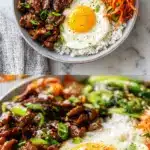
The first time I attempted a bulgogi rice bowl recipe at home, I ended up with a puddle of sweet soy sauce drowning a pile of chewy, grey beef strips. Most homemade attempts fail because the marinade floods the pan, boiling the meat instead of searing it, leaving you with gummy textures and zero caramelization.
This formula fixes that by using a grated Asian pear concentrate and a screaming hot skillet to trap moisture and build a deep, sticky crust. Inside: how to extract maximum flavor using grated fruit enzymes, the exact pan temperature for that coveted char, and how to layer your bowl so the rice stays fluffy and never turns soggy.
Table of Contents
The Anatomy of a Perfect Bulgogi Rice Bowl Recipe
A great bulgogi rice bowl recipe balances sweet, savory, and umami. The foundation is, of course, the rice. You want a short-grain or jasmine rice that cooks up slightly sticky so it can trap the rich meat juices.
If you are looking for a precise method for cooking grains, check out our guide on how to make the perfect spicy rice recipe to get the texture just right. The rice is a blank canvas. It absorbs the intense flavors of the meat and the sauce without falling apart.
Then comes the beef. Traditional bulgogi uses thinly sliced ribeye or sirloin, but getting those paper-thin slices at home requires a bit of trickery. Place your steak in the freezer for twenty minutes before slicing. The firmer exterior lets your knife glide through cleanly, so you get even pieces that cook in seconds.
When the meat hits the hot pan, the sugars in the marinade react with the heat to create a beautiful, dark crust. This Maillard reaction is what separates a restaurant-quality Korean bulgogi rice bowl from a soggy takeout container.
The sauce is the soul of this dish. It does double duty: it marinates the beef, then reduces in the pan to a glossy glaze that coats every strand. A proper bulgogi bowl with rice needs a sauce that balances low-sodium soy sauce, toasted sesame oil, and the sharp bite of fresh garlic and ginger.
The sweetness comes from brown sugar, but the real magic is the fruit. Grated Asian pear adds natural sweetness and contains enzymes that tenderize the beef, so every bite stays soft. If you want a richer, darker sauce profile, you might enjoy our korean bbq sauce recipe which dives into similar flavor profiles.
Print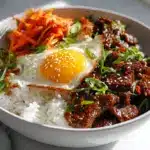
The Weeknight Bulgogi Rice Bowl Recipe That Changed My Dinner Routine
- Total Time: 30 min
- Yield: 4 servings 1x
Description
A quick and savory Korean beef bowl featuring thinly sliced ribeye marinated in soy sauce, sesame oil, grated Asian pear, and garlic. The beef is seared until caramelized and served over fluffy steamed rice with kimchi and vegetables.
Ingredients
For the beef and marinade:
1 lb ribeye steak (frozen for 20 minutes, thinly sliced)
1/3 cup low-sodium soy sauce
2 tbsp brown sugar
1 tbsp toasted sesame oil
3 cloves garlic (minced)
1 tbsp fresh ginger (grated)
1/2 Asian pear (grated)
1/4 small yellow onion (grated)
1 tbsp neutral cooking oil (for searing)
For the bowls:
4 cups cooked short-grain rice (hot)
1/2 cup kimchi
1/2 cup shredded carrots
2 scallions (thinly sliced)
1 tbsp toasted sesame seeds
2 large eggs (fried, optional)
1 tbsp gochujang (Korean chili paste)
Instructions
1. Place the ribeye steak in the freezer for 20 minutes, then slice it into very thin strips against the grain.
2. In a bowl, whisk together the soy sauce, brown sugar, sesame oil, minced garlic, grated ginger, grated Asian pear, and grated onion until the sugar dissolves.
3. Add the sliced beef to the marinade and toss to coat evenly. Let it sit at room temperature for 30 minutes.
4. Heat a cast iron skillet over high heat until it is smoking. Add the neutral cooking oil.
5. Add the beef in a single layer, working in two batches to avoid crowding the pan. Sear for 2 minutes until the edges caramelize and turn dark brown.
6. Flip the beef and cook for 1 more minute until the sauce reduces to a sticky glaze. Remove from heat immediately.
7. Divide the hot cooked rice among four bowls and top with the caramelized beef.
8. Add kimchi, shredded carrots, a fried egg, and a dollop of gochujang to each bowl. Sprinkle with scallions and sesame seeds before serving.
Notes
Store leftover beef and rice separately in the refrigerator for up to 3 days. Reheat the beef in a skillet over medium heat for 2 minutes.
If using ground beef instead of sliced ribeye, increase the cooking time to 7 minutes and break the meat into small crumbles while searing.
For a gluten free version, substitute the soy sauce with tamari.
- Prep Time: 15 min
- Cook Time: 15 min
- Category: Main Course
- Method: Stovetop
- Cuisine: Asian
Nutrition
- Serving Size: 1 bowl
- Calories: 620 kcal
- Sugar: 12 g
- Sodium: 980 mg
- Fat: 28 g
- Saturated Fat: 9 g
- Unsaturated Fat: 19 g
- Trans Fat: 0 g
- Carbohydrates: 58 g
- Fiber: 2 g
- Protein: 32 g
- Cholesterol: 135 mg
Mastering the Marinade and Sauce for Your Korean Beef Bowl Recipe
The secret to a great Korean beef bowl recipe is the chemistry of your marinade. When you develop a bulgogi rice bowl recipe, the marinade must do two things simultaneously: flavor the meat and alter its protein structure.
Soy sauce provides the salty umami baseline, while brown sugar balances the salt and aids in browning. Fresh ginger and garlic add a pungent, aromatic bite that cuts through the richness of the beef. Toasted sesame oil is added at the end, bringing a nutty warmth that is distinctly Korean.
The real secret ingredient in bulgogi is the Asian pear. When you grate the pear into the marinade, you are introducing a natural tenderizer. The fruit contains enzymes that break down tough muscle fibers, which is why the beef in a traditional bulgogi beef bowl is so melt-in-your-mouth soft.
If you cannot find an Asian pear, a sweet Bosc pear or even a grated Fuji apple works well. Grated onion does the same thing. It adds a subtle sulfurous bite and extra liquid to distribute the flavors across the meat.
To build the best bulgogi bowl sauce, you need to manage your ratios carefully. Too much soy sauce and the dish becomes overwhelmingly salty. Too much sugar and it burns before the meat cooks through. A ratio of three tablespoons of soy sauce to one and a half tablespoons of brown sugar hits the sweet spot.
You also want to let the beef soak for at least thirty minutes. If you are using ground beef instead of sliced steak, mix the sauce directly into the meat and let it sit while you prepare your rice. For a fantastic variation, our garlic brown sugar drumsticks use a similar sweet and savory caramelization technique.
Tested Substitutions Table
| Swap | Use Instead | What Changes |
|---|---|---|
| Ribeye Steak | Ground Beef (85/15) | Cooks in half the time, yields a finer texture with crispy bits |
| Asian Pear | Grated Fuji Apple | Slightly less floral sweetness, identical tenderizing effect |
| Brown Sugar | Coconut Sugar | Deeper, earthier molasses note, sauce darkens quicker in the pan |
| Gojuchang | Sriracha and a dash of miso | Thinner heat profile, less fermented funk, saltier finish |
| Short Grain Rice | Jasmine Rice | Grains are fluffier and less sticky, sauce pools slightly at the bottom |
| Fresh Garlic | Garlic Powder (half the amount) | Loses the sharp bite, adds a muted roasted background flavor |
Ingredients
Prep Time: 15 minutes | Cook Time: 15 minutes | Total Time: 30 minutes active (plus 20 minutes to firm the beef in the freezer and 30 minutes to marinate) | Yield: 4 servings
For the beef and marinade:
- 1 lb ribeye steak (frozen for 20 minutes, thinly sliced)
- 1/3 cup low-sodium soy sauce
- 2 tbsp brown sugar
- 1 tbsp toasted sesame oil
- 3 cloves garlic (minced)
- 1 tbsp fresh ginger (grated)
- 1/2 Asian pear (grated)
- 1/4 small yellow onion (grated)
- 1 tbsp neutral cooking oil (for searing)
For the bowls:
- 4 cups cooked short-grain rice (hot)
- 1/2 cup kimchi
- 1/2 cup shredded carrots
- 2 scallions (thinly sliced)
- 1 tbsp toasted sesame seeds
- 2 large eggs (fried, optional)
- 1 tbsp gochujang (Korean chili paste)
How to Make a Bulgogi Rice Bowl
- Place the ribeye steak in the freezer for 20 minutes, then slice it into very thin strips against the grain.
- In a bowl, whisk together the soy sauce, brown sugar, sesame oil, minced garlic, grated ginger, grated Asian pear, and grated onion until the sugar dissolves.
- Add the sliced beef to the marinade and toss to coat evenly. Let it sit at room temperature for 30 minutes.
- Heat a cast iron skillet over high heat until it is smoking. Add the neutral cooking oil.
- Add the beef in a single layer, working in two batches to avoid crowding the pan. Sear for 2 minutes until the edges caramelize and turn dark brown.
- Flip the beef and cook for 1 more minute until the sauce reduces to a sticky glaze. Remove from heat immediately.
- Divide the hot cooked rice among four bowls and top with the caramelized beef.
- Add kimchi, shredded carrots, a fried egg, and a dollop of gochujang to each bowl. Sprinkle with scallions and sesame seeds before serving.
Building and Layering Your Easy Bulgogi Bowl
Assembling an easy bulgogi bowl is about creating contrasting textures and temperatures. Start with a generous base of hot, freshly cooked rice. The steam from the rice will interact with the hot beef, blending the flavors in the bowl. Next, add your cooked bulgogi beef.
Do not dump all the pan sauce in at once. Drizzle a spoonful or two over the meat so the rice absorbs the flavor without turning into a dense, wet brick. You want every grain to remain distinct while still tasting the rich glaze.
Now you need texture and acidity. A bulgogi rice bowl recipe needs a crunchy element to contrast the soft meat and tender rice. Quick-pickled cucumbers or a spicy cucumber salad recipe provide a cold, acidic snap that cuts through the heavy beef.
Add a handful of shredded carrots or kimchi for a fermented tang. The kimchi introduces a funky, spicy chill that pairs well with the warm, sweet beef. If you love the funky, fermented bite of kimchi, you might also appreciate the complex flavors in our japchae bowl.
Finally, consider the garnishes. A sprinkle of toasted sesame seeds adds a visual finish and a subtle crunch. Thinly sliced scallions bring a sharp, fresh onion bite. If you like heat, a dab of gochujang or a drizzle of a creamy and hot spicy mayo sauce swirled on top adds a rich, cooling spice.
A fried egg with a runny yolk is another classic addition. The golden yolk breaks and mixes with the soy sauce, creating a rich, velvety coating for the rice. This layering technique is what turns a simple recipe into a meal you crave on a Tuesday night.
Cooking Techniques and Timing for the Best Bulgogi Beef Bowl
A great bulgogi beef bowl comes down to heat management and timing. You need a pan that is screaming hot. A cast iron skillet or a heavy carbon steel wok is ideal because they hold heat well. When you add the marinated beef to the pan, you want to hear a loud sizzle.
That sound means the water is evaporating instantly and the sugars are caramelizing. If your pan is too cool, the meat will release its juices and boil in the marinade, and you end up with grey, chewy strips. To prevent this, cook the beef in two batches to avoid overcrowding the pan.
The total cooking time for the beef is short. Sliced ribeye takes about two to three minutes per side. You are looking for deeply caramelized edges and a glossy, sticky glaze that clings to the meat. Ground beef takes slightly longer, around five to seven minutes, because you need to break it down and make sure every crumb gets crispy.
Once the beef is cooked, remove it from the heat immediately. The residual heat from the pan will continue to cook the meat, so transferring it to a bowl prevents overcooking. If you enjoy quick, high-heat cooking methods, our crispy rice salmon bites rely on similar pan-searing principles.
Try to time your rice so it finishes just as the beef comes off the stove. The bowls taste best when everything is hot. If you are using leftover rice, reheat it thoroughly so it is steaming hot when you assemble the bowl.
Cold rice will clump together and lower the temperature of the entire dish, muting the flavors of the sauce. A splash of water and a quick run in the microwave covered with a damp paper towel brings day-old rice back to life perfectly. For an entirely different approach to using leftover rice, our egg fried rice is a reliable staple.
Frequently Asked Questions
What is beef bulgogi?
Beef bulgogi is a traditional Korean dish consisting of thinly sliced beef marinated in a mixture of soy sauce, sugar, sesame oil, garlic, and pear. The meat is grilled or stir-fried quickly over high heat, resulting in tender, caramelized strips that are sweet and deeply savory.
What to put in a bulgogi rice bowl?
A standard bulgogi rice bowl starts with a base of steamed short-grain or jasmine rice, topped with the cooked beef bulgogi. Popular additions include kimchi, quick-pickled cucumbers, shredded carrots, a fried egg, toasted sesame seeds, and sliced scallions for crunch and acidity.
What is the secret ingredient in bulgogi?
The secret ingredient in bulgogi is grated Asian pear. The pear adds a delicate floral sweetness, but more importantly, it contains natural enzymes that break down the tough protein fibers in the beef, so the meat stays tender during the quick cooking process.
What are the ingredients in bulgogi bowl sauce?
The sauce combines low-sodium soy sauce for salt, brown sugar for sweetness, toasted sesame oil for nuttiness, and minced garlic and ginger for aromatics. Grated onion and Asian pear are mixed in for their tenderizing properties, while gochujang can be added for a spicy kick.
Make This Bulgogi Rice Bowl Recipe Your Weeknight Staple
Making a great bulgogi rice bowl at home comes down to heat, balance, and smart substitutions. By using grated fruit to tenderize the meat and a screaming hot pan to build that sticky crust, you skip the soggy textures that ruin homemade versions. You have what you need to build a bowl that rivals your favorite restaurant.
Make it, then tell me how yours turned out. Did you stick to ribeye or try the ground beef shortcut?
For more recipes like this bulgogi rice bowl recipe, follow us on Facebook and Pinterest for weeknight dinner ideas.
More recipes in this series: