The first time I tasted a truly great easy japanese curry recipe, I was surprised by how thick and savory it was. Nothing like the thin curries I grew up eating.
Most home cooks struggle with curry that turns out watery, bland, or mysteriously sweet. This method fixes those exact issues by building a proper butter and flour roux, then layering umami and aromatics for a deeply savory, thick sauce.
Inside: how to build a foolproof curry roux from scratch, the secret grated apple trick that balances acidity, and the exact simmer time for tender potatoes that hold their shape.
Table of Contents
The soul of homemade Japanese curry
Japanese curry, known locally as kare raisu, is a comforting staple that has evolved over centuries. It arrived in Japan via the British Navy in the late 1800s, originally as a simple meat and onion stew thickened with curry powder.
Over decades, Japanese home cooks adapted the dish to local tastes. It became a thick, sweet, and deeply savory sauce served over steamed short-grain rice. The result is a rich comfort food that feels distinct from its South Asian counterparts.
A truly great easy japanese curry recipe hinges on a few specific techniques and ingredients. The traditional base relies on a mix of butter and flour, cooked together to form a roux. This roux is then flavored with curry powder and garam masala, which together create a deeply aromatic sauce.
From that base, the cook builds a complex flavor profile using familiar aromatics like onions, garlic, and ginger. The onions must be cooked slowly until deeply browned and caramelized.
This caramelization matters because it gives the dish its sweet, savory, and earthy foundation. When you cook the onions properly, the kitchen fills with a nutty, sweet aroma that signals the start of something wonderful.
To build the savory profile, many home cooks incorporate Worcestershire sauce and soy sauce. These condiments add a tangy, umami-rich depth that plain curry powder cannot achieve on its own.
If you enjoy exploring different Asian comfort foods, you might find that building these sauce foundations is similar to the techniques used in an egg masala curry, where the onion base is equally important.
The final textural element comes from the vegetables and proteins. Diced carrots and potatoes are traditional. They give the dish a soft, starchy backbone that absorbs the flavorful sauce.
Chicken thighs work beautifully because they remain juicy and tender throughout the simmering process. By combining a well-developed roux, deeply caramelized aromatics, and a robust umami base, you get a quick weeknight meal that actually satisfies.
Print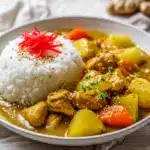
The Ultimate Easy Japanese Curry Recipe
- Total Time: 31 min
- Yield: 4 servings 1x
Description
A thick and savory Japanese chicken curry made with a homemade butter roux, caramelized onions, tender potatoes, and a secret grated apple for natural sweetness.
Ingredients
For the curry base:
1.5 lbs boneless skinless chicken thighs (cut into bite-sized pieces)
2 large yellow onions (thinly sliced)
2 medium Yukon Gold potatoes (peeled and diced)
2 large carrots (peeled and diced)
2 tablespoons vegetable oil
3 cups chicken broth (kept warm)
For the homemade roux:
4 tablespoons unsalted butter
4 tablespoons all-purpose flour
2 tablespoons Japanese curry powder
1 teaspoon garam masala
For the seasonings:
1 tablespoon Worcestershire sauce
1 tablespoon soy sauce
1 tablespoon honey
1 medium apple (peeled and grated)
For serving:
4 cups cooked short-grain Japanese rice
Pickled red ginger (fukujinzuke)
Toasted sesame seeds
Instructions
1. Heat vegetable oil in a large pot over medium heat. Add sliced onions and cook for ten minutes until deeply browned and caramelized.
2. Push onions aside and add chicken thighs. Sear for three minutes per side until a golden crust forms.
3. Add diced potatoes and carrots. Stir to coat in the rendered fat and cook for two minutes.
4. Pour warm chicken broth into the pot, scraping up browned bits. Bring to a boil, then reduce heat, cover, and simmer for twelve minutes.
5. In a separate saucepan, melt butter over low heat. Whisk in flour and cook for three minutes until sandy and nutty.
6. Remove roux from heat. Whisk in curry powder and garam masala until well combined.
7. Stir the roux into the simmering curry pot. Whisk vigorously for three minutes until the sauce thickens.
8. Add Worcestershire sauce, soy sauce, honey, and grated apple. Simmer for one more minute.
9. Taste and adjust seasonings. Serve hot over steamed short-grain rice.
Notes
Store in the refrigerator for up to 3 days or freezer for up to 2 months. Reheat on the stovetop over low heat with a splash of broth.
Substitute chicken thighs with beef sirloin or firm tofu for different variations.
For a thicker sauce, let the curry rest for ten minutes before serving.
Do not use russet potatoes as they will dissolve into the sauce.
- Prep Time: 13 min
- Cook Time: 18 min
- Category: Main Course
- Method: Stovetop
- Cuisine: Asian
Nutrition
- Serving Size: 1.5 cups
- Calories: 520 kcal
- Sugar: 14 g
- Sodium: 980 mg
- Fat: 22 g
- Saturated Fat: 8 g
- Unsaturated Fat: 14 g
- Trans Fat: 0 g
- Carbohydrates: 48 g
- Fiber: 5 g
- Protein: 34 g
- Cholesterol: 120 mg
Building the perfect curry roux
The roux is the structural foundation of your easy japanese curry recipe. You can buy store-bought curry cubes, but making the roux from scratch takes just a few minutes and yields a far superior, fresher flavor. To make the roux, melt butter in a saucepan over low heat.
Add an equal amount of all-purpose flour and whisk constantly. Cook this mixture until it turns a pale, sandy gold and smells distinctly like toasted nuts. This cooking step removes the raw flour taste that can ruin a good sauce.
Once the flour and butter are well combined and toasted, you need to bloom your spices. Whisk in curry powder and a pinch of garam masala. Blooming these spices in hot fat releases their essential oils.
The flavor and aroma intensify. The kitchen will fill with a warm, earthy scent. This spiced roux will eventually transform your liquid broth into a thick, glossy sauce that clings to every grain of rice.
But building the roux is only half the battle. Many cooks fail to balance the inherent bitterness of toasted curry powder. Grated apple is a classic Japanese addition here.
You stir it into the roux for natural sweetness and pectin, which helps thicken the sauce further. Honey and soy sauce also work together to round out the flavor. They add rich umami and a subtle sweetness that balances the spices.
If you are looking for another dish that relies on a quick pan sauce and tender protein, you might enjoy this 15 minutes chicken dinner. But for our curry, the roux and the seasonings form the core of the dish.
- Skipping the roux browning. Cooking the butter and flour until it smells nutty removes the raw, chalky taste that ruins many homemade Japanese curries. Whisk constantly for exactly three minutes.
- Adding cold broth too fast. Pouring cold stock into a hot roux causes immediate clumping. Whisk in warm broth gradually to maintain a smooth and silky sauce consistency.
- Overcooking the potatoes. Simmering the potatoes for too long turns them into mush and clouds the sauce. Check them at the twelve minute mark and remove from heat immediately when fork-tender.
- Burning the curry powder. Curry powder scorches in seconds. Remove the pan from direct high heat before stirring in the spices, and whisk constantly for just thirty seconds.
- Skipping the grated apple. Forgetting the grated apple leaves the curry tasting flat and bitter. The apple adds natural sweetness and pectin that thickens the sauce nicely.
- Using the wrong cut of meat. Lean chicken breasts dry out during the simmer. Use boneless skinless chicken thighs instead, as they stay juicy and tender in the thick sauce.
Selecting and preparing your ingredients
A great easy japanese curry recipe requires the right balance of proteins, starches, and aromatics. Traditional Japanese curry often uses beef, slowly simmered until meltingly tender. Japanese chicken curry is incredibly popular for weeknight cooking, though, because it cooks quickly and absorbs the rich sauce effortlessly.
You want to use boneless skinless chicken thighs, cut into bite-sized pieces. Breasts tend to dry out during the simmer, but thighs stay juicy and soak up the curry flavor. The chicken should be seared first to develop a deep brown crust. This locks in the savory meat juices.
The vegetable medley matters too. Yukon Gold potatoes are ideal here because they hold their shape well during simmering. Avoid starchy russets, which will disintegrate and cloud your sauce. Cut the potatoes into medium chunks so they cook evenly without turning into mush.
Carrots add a bright orange color and a natural sweetness that complements the toasted curry powder. Cut them into rolling cuts. This creates larger surface areas that catch the sauce.
Onions are the unsung heroes of this dish. You need large yellow onions, sliced thinly. The goal is to cook them down until they are deeply caramelized and jammy. This process takes patience and yields a sweet, savory base that forms the soul of the curry.
The smell of onions slowly turning golden brown in butter is one of the best aromas you can create in your kitchen. If you love deeply savory chicken dishes with rich pan sauces, the garlic butter chicken bites on the blog use a similar caramelization technique.
Finally, the liquids and seasonings. You need a high-quality chicken broth to form the body of the sauce. Keep some warm on the stove. You will also need Worcestershire sauce and soy sauce to add that deep, savory umami flavor. The grated apple goes in at the end.
It melts into the sauce. Steamed short-grain Japanese rice is the traditional accompaniment. It gives you a sticky, neutral base that soaks up the thick sauce. For a vegetarian twist on these umami flavors, our creamy tofu scramble shows how well soy sauces pair with delicate proteins.
Ingredients
Prep Time: 13 minutes | Cook Time: 18 minutes | Total Time: 31 minutes | Yield: 4 servings
For the curry base:
- 1.5 lbs boneless skinless chicken thighs (cut into bite-sized pieces)
- 2 large yellow onions (thinly sliced)
- 2 medium Yukon Gold potatoes (peeled and diced)
- 2 large carrots (peeled and diced)
- 2 tablespoons vegetable oil
- 3 cups chicken broth (kept warm)
For the homemade roux:
- 4 tablespoons unsalted butter
- 4 tablespoons all-purpose flour
- 2 tablespoons Japanese curry powder
- 1 teaspoon garam masala
For the seasonings:
- 1 tablespoon Worcestershire sauce
- 1 tablespoon soy sauce
- 1 tablespoon honey
- 1 medium apple (peeled and grated)
For serving:
- 4 cups cooked short-grain Japanese rice
- Pickled red ginger (fukujinzuke)
- Toasted sesame seeds
Step-by-step cooking process
Making an easy japanese curry recipe requires careful layering of flavors. Start by heating a large heavy-bottomed pot or Dutch oven over medium heat. Add a splash of oil and the sliced onions. Cook the onions slowly for about ten minutes until they are deeply browned and caramelized.
The edges should be crispy and the kitchen should smell sweet and savory. Push the onions to one side of the pot and add the bite-sized chicken thighs in a single layer. Sear the meat for three minutes per side until a golden crust forms. This browning adds a lot of depth to the final sauce.
Once the chicken is browned, add the diced carrots and potatoes. Stir everything together to coat the vegetables in the chicken fat and onion renderings. Pour in the warm chicken broth. Use a wooden spoon to scrape up any browned bits from the bottom of the pot.
These stuck bits are pure flavor. Bring the mixture to a gentle boil, then reduce the heat to low, cover the pot, and let it simmer for about twelve minutes until the potatoes are easily pierced with a fork.
While the vegetables and meat simmer, prepare the roux in a separate saucepan. Melt butter over low heat, whisk in flour, and cook for three minutes.
Remove from heat and whisk in curry powder and garam masala. This keeps the spices from burning. Stir the warm roux into the simmering pot. Whisk vigorously to prevent lumps. The sauce will immediately begin to thicken.
Let it simmer for another three minutes until the texture is glossy and coats the back of a spoon. Add Worcestershire sauce, soy sauce, honey, and grated apple.
Stir well and let it bubble for one final minute. The sauce should be thick and rich. If you love a good chicken curry, you should also try our simple chicken curry for another weeknight option.
If you want to expand your Japanese comfort food repertoire, this curry is a great starting point. It pairs well with other classics. Once you have your curry simmering, it takes just moments to prepare the rice.
If you want a full Japanese comfort meal, consider serving this alongside omurice japanese omelette rice recipe for a truly authentic spread. The contrast between the thick curry and the fluffy omelette rice is pure magic.
- Heat vegetable oil in a large pot over medium heat. Add sliced onions and cook for ten minutes until deeply browned and caramelized.
- Push onions aside and add chicken thighs. Sear for three minutes per side until a golden crust forms.
- Add diced potatoes and carrots. Stir to coat in the rendered fat and cook for two minutes.
- Pour warm chicken broth into the pot, scraping up browned bits. Bring to a boil, then reduce heat, cover, and simmer for twelve minutes.
- In a separate saucepan, melt butter over low heat. Whisk in flour and cook for three minutes until sandy and nutty.
- Remove roux from heat. Whisk in curry powder and garam masala until well combined.
- Stir the roux into the simmering curry pot. Whisk vigorously for three minutes until the sauce thickens.
- Add Worcestershire sauce, soy sauce, honey, and grated apple. Simmer for one more minute.
- Taste and adjust seasonings. Serve hot over steamed short-grain rice.
Serving, storing, and perfecting your curry
Serving an easy japanese curry recipe is all about presentation and texture contrast. Start with a bed of freshly steamed short-grain rice. The rice should be sticky enough to clump together but still have a slight bite. Ladle the thick, rich curry over one side of the rice.
Let the sauce pool around the bowl. The contrast between the pristine white rice and the deep brown curry is visually striking. Garnish with finely chopped pickled red ginger, called fukujinzuke. The tangy crunch cuts through the rich sauce.
A sprinkle of toasted sesame seeds adds a nutty aroma and a subtle crunch. The curry will thicken further as it sits, so if you are serving it later, you may need to add a splash of broth to loosen it.
The smell of the warm spices and savory chicken should fill the dining room. Mouths will water instantly. The potatoes should be soft enough to yield to a spoon but hold their shape, and the chicken should be melt-in-the-mouth tender.
Storing leftovers is simple. Let the curry cool completely to room temperature before transferring it to an airtight container. Store it in the refrigerator for up to three days. The flavors actually deepen and improve overnight. It is an excellent make-ahead meal.
To reheat, place it in a pot over low heat. Add a splash of chicken broth to thin the sauce as it warms. You can also freeze this curry for up to two months. Freeze in individual portions so you can reheat only what you need.
If you want to serve this curry with a kick, how to make spicy mayo sauce creamy and hot gives you a perfect drizzle to contrast the sweet and savory notes.
Alternatively, pairing your Japanese curry with rice is classic, but if you want a spiced side, our spicy rice recipe offers a completely different flavor profile. For a vegetarian twist, a spicy chickpea curry recipe uses similar simmering techniques without the meat. Enjoy the rich texture of your easy japanese curry recipe throughout the week.
Frequently asked questions
What is the secret ingredient in Japanese curry?
The secret ingredient is grated apple. It adds natural sweetness and pectin, which helps thicken the sauce while balancing the bitterness of the curry powder. Worcestershire sauce and soy sauce also add essential umami depth.
Is it easy to make Japanese curry?
Yes, making Japanese curry is quite easy. The process involves caramelizing onions, browning meat, simmering vegetables in broth, and stirring in a simple butter and flour roux. It takes under thirty minutes to prepare from scratch.
What are some common mistakes when making Japanese curry?
Common mistakes include burning the curry powder, adding cold broth to the hot roux, and overcooking the potatoes until they turn to mush. Another mistake is skipping the grated apple, which leaves the curry tasting flat and overly bitter.
What is the secret to a rich Japanese curry flavor?
A rich Japanese curry flavor comes from slowly caramelizing the onions and properly browning the chicken. Blooming the curry powder in hot butter and adding umami boosters like soy sauce and Worcestershire sauce also creates that deep, complex taste.
Cook This Easy Japanese Curry Recipe Tonight
A truly great easy japanese curry recipe balances thick, savory sauces with tender chicken and perfectly cooked potatoes. By making the roux from scratch and using that secret grated apple, you avoid the bland, watery results that plague many homemade attempts.
This rich and comforting dish earns a permanent spot in the weeknight rotation. The depth of flavor and simple preparation make it a reliable favorite for busy evenings and lazy weekends alike.
For more recipes like easy japanese curry recipe, follow us on Facebook and Pinterest for cozy comfort food ideas.
More recipes in this series: