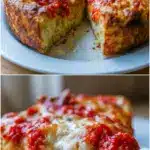
Developing a reliable Gluten free pizza crust recipe changed how I host Friday night dinners. I spent years watching guests peel brittle, cracker-like slices off the pan. Now I pull a golden, foldable pie from the oven and nobody asks for a fork.
Most gluten free pizza dough ends up gummy in the center or so dry it crumbles under the weight of toppings. This method uses psyllium husk and a precise hydration ratio to build a base that is crisp on the outside and chewy inside.
By the end, you’ll know how to blend flours for structure, the par-bake trick that stops soggy bottoms, and the shaping technique that replaces traditional kneading.
Table of Contents
The Science of Gluten Free Pizza Dough
Understanding the ingredients is the secret to making a gluten free pizza crust recipe that holds up to heavy toppings. Traditional wheat dough relies on gluten strands to trap air and create stretch. Without gluten, you need a combination of binders and starches to mimic that chewy structure. A good gluten free pizza base comes down to browning and hydration. Get those right and the rest follows.
Your flour blend is the foundation. Brown rice flour provides a hearty, slightly nutty flavor, while almond flour adds moisture and a tender crumb. Arrowroot and tapioca starches lighten the mix so it is not dense. Because these flours absorb liquid differently than wheat, you must measure carefully. Always use a kitchen scale. A cup of brown rice flour can vary in weight by almost an ounce depending on how you scoop it, which ruins the hydration ratio.
The real workhorse of celiac safe pizza dough is psyllium husk powder. When mixed with warm water, psyllium forms a gel that mimics the stretch and pull of gluten. This gel allows you to stretch the dough without it tearing immediately. Xanthan gum provides a secondary structural network that keeps the baked crust from turning into a pile of crumbs on your plate.
Yeast remains essential for flavor. Even though there is no gluten for the yeast to push against, yeast produces carbon dioxide that creates tiny air pockets in the starch gel. You also need a dash of apple cider vinegar. The acid weakens the starch molecules just enough so they absorb water faster, and it adds a subtle tang that tastes like a long-fermented dough. If you want to experiment with other grain-free baking, you can apply these gel-building principles to our rice paper dumplings a healthy gluten free delight.
Print
The Gluten Free Pizza Crust Recipe That Actually Bends
- Total Time: 48 min
- Yield: 2 pizza crusts 1x
- Diet: Gluten Free
Description
This gluten free pizza crust recipe uses psyllium husk and brown rice flour to create a crispy and chewy base. A quick par-bake ensures the center stays fully cooked and the bottom remains crisp under your favorite toppings.
Ingredients
For the pizza dough:
1 cup brown rice flour
1/2 cup tapioca starch
1/4 cup almond flour
1 tbsp psyllium husk powder
1 tsp xanthan gum
1 tsp active dry yeast
1 tsp honey
3/4 cup warm water (110–115 degrees F)
1 tbsp olive oil
1 tsp apple cider vinegar
1/2 tsp sea salt
For baking:
1 tbsp olive oil (for brushing)
1/4 cup low-moisture mozzarella cheese (shredded)
1/4 cup tomato sauce
Instructions
1. Combine the warm water, honey, and yeast in a glass bowl. Let it sit for 5 minutes until the mixture becomes frothy and smells like warm bread.
2. Whisk the brown rice flour, tapioca starch, almond flour, psyllium husk powder, xanthan gum, and sea salt in a large mixing bowl.
3. Pour the frothy yeast mixture, olive oil, and apple cider vinegar into the dry ingredients. Stir vigorously with a wooden spoon until a wet, sticky dough forms.
4. Cover the bowl with a damp towel and let the dough rest for 15 minutes so the psyllium husk can fully hydrate and form a stretchy gel.
5. Place a sheet of oiled parchment paper on your counter. Transfer the dough to the center and press it flat. Top with another oiled sheet of parchment and roll to a 10 inch circle.
6. Slide the parchment paper with the dough onto a preheated pizza stone. Bake at 450 degrees F for 8 minutes until the surface looks dry and matte.
7. Remove the par-baked crust from the oven. Add your tomato sauce and shredded mozzarella cheese.
8. Return the pizza to the oven and bake for another 15 minutes until the cheese is bubbling and the crust edges are golden brown.
Notes
Store in the refrigerator for up to 3 days or freezer for up to 3 months. Reheat at 350 degrees F for 10 minutes.
You can replace the honey with granulated sugar to keep this recipe vegan.
If the dough feels too sticky to shape, wet your hands with cold water before pressing it flat.
For a no-yeast quick version, omit the yeast and honey and add 1 tbsp of baking powder to the dry ingredients.
- Prep Time: 10 min
- Rest Time: 15 min
- Cook Time: 23 min
- Category: Main Course
- Method: Baking
- Cuisine: Italian
Nutrition
- Serving Size: 1 pizza crust
- Calories: 280 kcal
- Sugar: 2 g
- Sodium: 450 mg
- Fat: 9 g
- Saturated Fat: 2 g
- Unsaturated Fat: 7 g
- Trans Fat: 0 g
- Carbohydrates: 42 g
- Fiber: 4 g
- Protein: 6 g
- Cholesterol: 5 mg
Shaping and Baking Your GF Pizza Crust
Working with gluten free pizza dough requires a different mindset than traditional wheat dough. You cannot knead it on a wooden board for ten minutes. Instead, you mix it thoroughly and let the binders do the work. The dough will look wet and sticky right after you combine the ingredients. This is normal and necessary. Resist the urge to add more flour, or your crust will dry out.
After the dough rests, it transforms into a cohesive, slightly tacky ball. Instead of tossing it in the air, you shape it on parchment paper. Lay a sheet of parchment on your counter and lightly oil it. Transfer the dough to the center and press it flat. Place another sheet of oiled parchment on top and use a rolling pin to roll it to your desired thickness. This top sheet stops the dough from sticking to your rolling pin and keeps your hands clean.
The par-bake is the step that makes or breaks this Gluten free pizza crust recipe. Raw GF pizza crust contains high starch levels. If you pile sauce and cheese on raw dough and put it in the oven, the moisture from the toppings will seep into the base. You will end up with a gummy center. Slide the parchment onto a preheated pizza stone and bake the crust plain for eight minutes. The crust will dry out and form a protective barrier. Take it out, add your toppings, and finish baking until the cheese bubbles. This approach also works well for a classic pizza rustica recipe where a sturdy base matters.
You need a hot oven for a crispy bottom. Preheat your oven to 450 degrees Fahrenheit and place a pizza stone inside for at least forty five minutes. A pizza peel makes transferring the parchment paper much easier.
Even with a great recipe, things can go wrong. Here is a troubleshooting guide for your gluten free homemade pizza.
| Problem | Cause | Fix |
|---|---|---|
| Crumbly texture | Not enough binder | Add 1/2 tsp of xanthan gum or 1 tbsp of psyllium husk powder |
| Gummy center | Undercooked dough or too much sauce | Par-bake the crust plain before adding toppings |
| Dough will not stretch | Psyllium gel did not set | Let the dough rest for 15 more minutes before shaping |
| Burnt bottom | Stone is too hot | Lower the oven rack by one level or reduce heat by 25 degrees |
| Sticks to paper | Insufficient oil | Lightly oil the parchment paper on both sides before rolling |
Perfecting the Flavor and Toppings
A great crust needs the right toppings. Because a gluten free pizza crust recipe has a slightly sweeter and nuttier flavor profile than wheat dough, your sauce and cheese choices matter. A rich, low-moisture mozzarella works best because it melts evenly and does not flood the crust. Fresh mozzarella contains too much water and will undo the crispiness you achieved during the par-bake.
For sauce, keep it thick. Simmer your tomatoes until they coat a spoon. A watery sauce is the enemy of a crispy base. If you want a spicy kick, our easy chili oil recipe makes a perfect finishing oil. Drizzle it over the hot pizza right when it comes out of the oven. The chili oil seeps into the crust and adds a bright, savory heat that balances the nutty flavors.
Consider your cooking vessel. A pizza stone retains high heat and pulls moisture from the crust, giving you a crackling bottom. If you do not have a stone, use an inverted baking sheet. Preheat it in the oven and slide the parchment paper right on top. It will not crisp quite as much as stone, but it works well.
Yeast requires warmth and food to activate. Water between 110 and 115 degrees Fahrenheit is the sweet spot. If the water is too hot, it kills the yeast. If it is too cold, the yeast stays dormant. Add a teaspoon of honey or sugar to the warm water. The yeast will bubble and foam within five minutes. This proofing step gives your crust those tiny air pockets.
If you want to try different flavor profiles, blend sweet and savory toppings. Try prosciutto and fig, or add a drizzle of hot honey. The slightly sweet crust pairs surprisingly well with spicy and salty ingredients. You can also use this base for other recipes that need a sturdy foundation, like pizza enchiladas which require a structural dough that holds up under heavy sauces.
Variations and No-Yeast Quick Fixes
Sometimes you want pizza but you do not have time to wait for yeast to proof. You can make a rapid version of this Gluten free pizza crust recipe by swapping the yeast for baking powder. Baking powder provides an instant lift. The texture will be slightly denser and more biscuit-like than the yeast version, but it is still delicious and satisfies the craving in under thirty minutes.
To make the quick version, omit the yeast and the honey. Increase the baking powder to one tablespoon. Mix the dough, let it rest for five minutes so the psyllium husk can absorb the liquid, and then shape it. Par-bake it for six minutes, add toppings, and finish baking for twelve minutes. The crust will not brown quite as deeply, so you can brush the edges with olive oil before baking to encourage a golden finish.
You can also change the flour blend to suit your dietary needs. For a grain-free option, use a blend of almond flour and tapioca starch. Almond flour makes the crust rich and tender. Keep the psyllium husk powder and xanthan gum in the recipe. They are still required for the bendy structure. An all-almond flour crust will be too oily and dense, so the starch is required to lighten it.
If you want to prepare ahead, this gluten free pizza dough freezes beautifully. Double the recipe and shape two crusts. Par-bake them both for eight minutes. Let them cool completely on a wire rack. Wrap the cooled crusts tightly in plastic wrap and freeze them for up to three months. When you need a quick dinner, pull a crust from the freezer, add your toppings straight from the frozen state, and bake for fifteen minutes at 450 degrees Fahrenheit. It is perfect for busy weeknights.
Sweet applications are also possible. Brush the baked crust with butter and cinnamon sugar for a dessert flatbread, or top it with mascarpone and berries. The dough handles sweet flavors just as well as savory ones, so it earns its keep in a gluten free kitchen.
Frequently Asked Questions
What is the best flour for gluten free pizza dough?
The best flour blend combines brown rice flour and lighter starches like arrowroot or tapioca. You need whole grain flours for structure and starches for lightness. Measure by weight using a kitchen scale to maintain the correct hydration. Always add a binder like psyllium husk powder or xanthan gum to replace the stretch of gluten.
What is the best gluten-free pizza crust recipe?
The best Gluten free pizza crust recipe uses a mix of brown rice flour, tapioca starch, and psyllium husk powder. The psyllium husk forms a gel that gives the dough its signature bend and chew. Par-baking the crust before adding toppings keeps the bottom crispy and prevents the center from becoming gummy.
What are the common mistakes when baking gluten-free pizza?
The most common mistake is skipping the par-bake. If you put sauce and cheese on raw dough, the moisture creates a gummy center. Another mistake is adding too much flour during shaping. Gluten free dough needs to be slightly wet to bake properly. Over-handling the dough can also deflate the air pockets.
What are some tips for making gluten-free pizza crust?
Always use parchment paper when shaping and transferring the dough. GF pizza crust is fragile and will stick to a traditional pizza peel. Preheat your oven with a pizza stone inside for at least forty five minutes. Use warm water between 110 and 115 degrees Fahrenheit to activate the yeast without killing it.
Can I make this gluten free pizza dough without a stand mixer?
Yes, you can mix it by hand. Use a sturdy wooden spoon and a large bowl. The dough will be wet and sticky at first. Keep stirring until the psyllium husk absorbs the water and the dough forms a sticky ball. Let it rest covered for fifteen minutes so the binders can hydrate fully before shaping.
How do I store leftover gluten free pizza crust?
Store baked leftovers in an airtight container in the refrigerator for up to three days. Reheat the slices in a hot skillet on the stove to crisp the bottom. You can also freeze the shaped and par-baked crusts for up to three months. Add toppings and bake directly from frozen for a quick weeknight dinner.
Conclusion
Finding a reliable Gluten free pizza crust recipe means you never have to settle for brittle, crumbly pizza again. The secret is the psyllium husk gel, precise hydration, and the par-bake technique. These steps give you a crust with a crispy bottom and a chewy interior that folds perfectly.
Make this dough this weekend and tell me how your version turned out. Did you stick with classic margherita or try something bold?
For more recipes like Gluten free pizza crust recipe, follow us on Facebook and Pinterest for weeknight dinner ideas.
More recipes in this series: