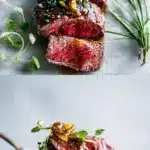
Beef Tataki is the dish that taught me searing and serving rare beef doesn’t have to be intimidating, it just has to be intentional. A blazing-hot pan, thirty seconds per side, and a plunge into ice water produce something quietly spectacular.
Many home cooks worry about undercooking beef or ending up with a gray, overcooked center when they try Japanese-style seared beef. This recipe gives you a clear method and exact timing so the blush-pink center stays exactly where you want it.
By the end, you’ll know how to choose the right cut, build a balanced ponzu dipping sauce from scratch, and slice and plate your tataki like the Japanese izakayas that inspired it.
Table of Contents
What Is Beef Tataki and Why Is It So Special?
If you’ve ever sat at a Japanese restaurant and watched paper-thin slices of barely-seared beef arrive fanned across a cold plate, you’ve already met this dish. Beef Tataki is simple and technical at once. That combination is what makes it extraordinary.
The Origins of Tataki
The word “tataki” comes from the Japanese verb meaning “to pound” or “to beat.” It originally referred to fish or meat pounded with aromatics before searing. Over time, the pounding stopped but the name stayed. The technique is believed to have originated in the Tosa region of Shikoku, where fishermen used the same high-heat, fast-cook method on bonito. Eventually, beef found its way into the preparation, and Japanese beef tataki became a fixture in izakaya menus across the country.
The core idea is counterintuitive: you use intense heat not to cook the meat through, but to create a thin, flavorful crust while keeping everything inside practically raw. The beef spends no more than sixty to ninety seconds total in contact with the pan. Your timing has to be deliberate.
How Tataki Differs from Carpaccio or Rare Steak
People sometimes lump seared beef tataki together with Italian carpaccio or a simple rare steak, but the differences matter. Carpaccio is entirely raw, sliced paper-thin, and dressed with olive oil and lemon. A rare steak is cooked to an internal temperature of around 125°F and rested warm. Beef Tataki is briefly seared on all sides, chilled immediately in ice water to stop carryover cooking, then sliced thin and served cold or at room temperature with a bright, citrusy ponzu sauce. The ice bath is the step most home cooks skip, and it makes the difference between clean pink slices and a murky gray ring.
The result has a texture unlike either of its relatives. The outside carries a whisper of char and sesame oil. The inside is silky and deeply beefy. The ponzu sauce cuts through with a tart, umami-rich finish. It is a starter, a sharing plate, and honestly, sometimes dinner all by itself.
If you enjoy exploring beef-forward recipes with layered technique, our beef wellington recipe is another rewarding project worth bookmarking.
Print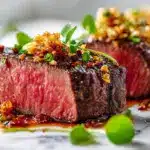
Beef Tataki: The Japanese Seared Beef You’ll Make Again and Again
- Total Time: 2 hours 20 minutes
Description
Beef Tataki is a Japanese preparation of whole beef tenderloin, quickly seared on all sides in a screaming-hot pan, chilled in ice water to lock in the pink interior, then sliced thin and served cold with a citrusy ponzu dipping sauce. The result is silky, lightly smoky beef with a bright, umami-rich sauce that keeps every bite clean and satisfying.
Ingredients
For the beef:
400 g (14 oz) beef tenderloin center cut (silverskin removed, patted dry)
1 tsp fine sea salt
1/2 tsp freshly cracked black pepper
1 tbsp sesame oil
For the ponzu sauce:
60 ml (1/4 cup) soy sauce
30 ml (2 tbsp) fresh lemon juice
15 ml (1 tbsp) fresh lime juice
30 ml (2 tbsp) mirin
1 tbsp rice vinegar
5 g (1/4 cup loosely packed) dried bonito flakes (katsuobushi)
1 small piece dried kombu (about 5 cm / 2 inches)
For the garnishes:
1/2 cup daikon radish (finely grated, excess water squeezed out)
2 tbsp fresh ginger (cut into fine matchsticks)
2 spring onions (thinly sliced on the diagonal)
3 garlic cloves (thinly sliced and pan-fried until golden and crisp)
1 tbsp toasted sesame seeds
4 shiso leaves (thinly sliced, optional)
- Prep Time: 15 min
- Rest Time: 120 min
- Cook Time: 5 min
- Category: Appetizer
- Method: Stovetop
- Cuisine: Japanese
Nutrition
- Serving Size: 4 to 5 slices with ponzu sauce
- Calories: 210 kcal
- Sugar: 3 g
- Fat: 9 g
- Saturated Fat: 3 g
- Unsaturated Fat: 6 g
- Trans Fat: 0 g
- Carbohydrates: 5 g
- Fiber: 1 g
- Protein: 27 g
- Cholesterol: 72 mg
Choosing the Right Beef and Ingredients
The quality of your ingredients does more heavy lifting here than in almost any other beef recipe, because there is nowhere for a subpar cut to hide.
The Best Cut for Beef Tataki
Beef tenderloin is the classic choice, and for good reason. It has almost no connective tissue, a buttery texture, and a mild, clean beef flavor that lets the ponzu sauce come forward. Look for a center-cut tenderloin filet, sometimes labeled as “chateaubriand” at the butcher counter. A 400-gram (about 14-ounce) piece will feed four as a generous starter or light main course.
Eye of round is a budget-friendly alternative. It is leaner and slightly firmer in texture, but when sliced thin across the grain, it works beautifully. Sirloin tip is another option. Avoid cuts with heavy marbling or thick fat caps, since those textures don’t work well when served cold and thin.
Whatever cut you choose, ask your butcher to trim the silverskin completely. That tough membrane won’t soften during a sixty-second sear, and it will make slicing difficult.
Key Ingredients for the Ponzu Sauce
A classic ponzu sauce is tart, salty, slightly sweet, and carries a quiet smokiness from bonito flakes. Here is what you need:
- Soy sauce (regular or light, not dark)
- Fresh yuzu juice, or a mix of fresh lemon juice and fresh lime juice if yuzu is unavailable
- Mirin (sweet rice wine)
- Rice vinegar
- Dried bonito flakes (katsuobushi)
- Kombu (a small piece of dried kelp)
You can find bonito flakes and kombu at Asian grocery stores and many large supermarkets. If both are unavailable, a squeeze of extra lemon juice and a splash of fish sauce will approximate the umami depth. Let the sauce sit for at least two hours before serving, ideally overnight, so the bonito and kombu can fully steep.
Supporting Ingredients for Plating
- Fresh ginger, cut into fine matchsticks
- Garlic, thinly sliced and lightly fried until crisp
- Sliced spring onions (green onions)
- Daikon radish, finely grated
- Toasted sesame seeds
- Micro shiso or thin-cut shiso leaves, if available
- Sesame oil, for searing
These garnishes matter. The ginger matchsticks add sharp heat, the crispy garlic adds crunch, the grated daikon cools and cleanses between bites, and the sesame seeds add a nutty finish that ties back to the sesame oil used in the sear.
How to Make Beef Tataki: Step-by-Step
This is where the process becomes very clear. Don’t multitask during the sear. Keep your focus on the pan, your thermometer nearby, and your ice bath already prepared before you put the beef anywhere near the heat.
Preparing the Beef
Remove the beef tenderloin from the refrigerator thirty minutes before cooking. Letting it come closer to room temperature gives you more control over the sear. A fridge-cold piece of meat can drop your pan temperature significantly the moment it makes contact, leading to an uneven crust. Pat the surface completely dry with paper towels. Any moisture on the surface will create steam and prevent proper browning. Season generously with fine sea salt and freshly cracked black pepper on all sides.
Making the Ice Bath
Fill a large bowl with cold water and a generous amount of ice. Set it near your stove. The beef goes directly from pan to ice bath the moment searing is done, so you want it within arm’s reach.
The Sear
Heat a heavy skillet (cast iron is ideal) over the highest heat your stove allows for at least three minutes. The pan should be visibly smoking. Add a small amount of sesame oil, swirl it to coat the bottom, and immediately lay in the beef. You will hear a loud, aggressive sizzle. That sound is exactly right.
Sear for 20-25 seconds per side, rolling the beef to sear all sides including the ends. The total searing time should be no more than 90 seconds. The outside should be golden brown with visible crust. The center should still feel soft and yielding when you press it gently.
Transfer the seared beef immediately to the ice bath. Let it sit in the ice water for five minutes. This stops carryover cooking instantly and keeps the interior at that perfect blush-pink stage. Remove, pat dry, and wrap tightly in plastic wrap, shaping it into an even cylinder as you roll. Refrigerate for at least two hours before slicing.
Slicing and Plating
Use the sharpest knife you own. A long, thin slicing knife or a Japanese santoku works best. Slice the chilled beef into rounds about 3mm thick. Arrange them in overlapping fans on a chilled plate or a flat stone surface.
Spoon the ponzu sauce around and over the beef, not drowning it, just enough to pool lightly around the slices. Add grated daikon in a small mound to one side, scatter ginger matchsticks and sliced spring onions across the top, finish with crispy garlic and a pinch of toasted sesame seeds. The plate should smell of citrus and sesame, look like it took far more effort than it did, and taste like a restaurant.
For another Japanese-inspired dish that pairs well at a dinner spread, our crispy rice salmon bites are a natural companion on the table.
Serving, Storing, and Getting Ahead
How to Serve Beef Tataki
This dish is most often served as an appetizer or starter, and it earns that spot on the menu. Serve it cold or at room temperature on a flat plate. Individual portions of about four to five slices per person work well as a starter. If you are serving it as a light main course, six to eight slices alongside steamed rice and a simple cucumber salad makes a complete meal.
A chilled dry sake, a crisp Japanese lager, or a dry, high-acid white wine like a Grüner Veltliner pairs beautifully with the ponzu and the lean beef.
Storage Tips
The seared, unsliced beef roll keeps well in the refrigerator for up to two days when wrapped tightly in plastic. Don’t slice until you are ready to serve, since cut surfaces oxidize and dry out quickly. The ponzu sauce, stored in a sealed jar, keeps for up to five days in the refrigerator and actually improves after the first day as the flavors meld.
If you have leftover sliced tataki, cover it with a thin layer of ponzu, press plastic wrap directly onto the surface of the meat, and refrigerate for up to one day. Don’t freeze sliced tataki; the texture becomes watery and unpleasant once thawed.
Getting Ahead for a Dinner Party
This is genuinely one of the best make-ahead starters you can offer guests. Make the ponzu sauce the day before. Sear and chill the beef up to twenty-four hours in advance. When guests arrive, all you need to do is slice and plate. That kind of calm before guests sit down is worth more than almost any other kitchen strategy.
If you are building out a full dinner menu around this dish, it pairs naturally with miso soup, a light Japanese cucumber salad, and steamed short-grain rice.
Scaling the Recipe
The recipe scales easily. For eight people, sear two separate pieces of beef rather than one large piece; a single large log is harder to sear evenly. Keep each piece between 350 and 450 grams for the best sear-to-size ratio. Make a double batch of ponzu and garnishes accordingly.
Frequently Asked Questions
Is it safe to eat Beef Tataki?
Beef tataki is served with the interior essentially raw, similar to sushi or carpaccio. Using high-quality, fresh beef from a trusted butcher significantly reduces risk. The hot sear does kill surface bacteria, which is where contamination most commonly occurs on whole muscle cuts. If you are pregnant, immunocompromised, or serving young children, use a thermometer to cook the beef to at least 145°F internally.
Can I make Beef Tataki without yuzu juice?
Yes, absolutely. A combination of fresh lemon juice and fresh lime juice in equal parts is the most common substitute, and it works very well. The citrus flavor will be slightly different, a little sharper and less floral than yuzu, but the sauce will still be bright and well-balanced. Bottled yuzu juice is also available at many Asian grocery stores and online if you want to stay closer to the original.
What is the best way to slice Beef Tataki thinly?
The two most important factors are a very sharp knife and a very cold piece of beef. Wrapping the seared beef tightly in plastic and refrigerating it for at least two hours firms the texture and makes clean, thin slicing much easier. Aim for slices about 3mm thick, cutting in a single smooth draw rather than sawing back and forth, which tears the surface.
Can I use a different cut instead of beef tenderloin?
Yes. Eye of round and sirloin tip are both good budget alternatives. They are leaner and slightly firmer, but they slice cleanly when cold and still taste excellent with ponzu sauce. Avoid heavily marbled cuts like ribeye for this preparation; the fat doesn’t work well at cold serving temperatures and the texture becomes waxy rather than silky.
Conclusion
Beef Tataki is proof that restraint in the kitchen can produce something genuinely impressive. The technique asks for confidence, a very hot pan, and the discipline to pull the beef off the heat before your instincts tell you it is done. Follow the steps here and you will land that rose-pink center every single time.
Give this recipe a try on a quiet weekend when you have time to let the beef chill properly and plate without rushing. It is the kind of dish that feels like a real occasion even on a Tuesday.
For more recipes like Beef Tataki, follow us on Facebook and Pinterest for Japanese-inspired dinner ideas and elegant entertaining recipes.