Imagine a plate of glistening noodles, tossed with colorful vegetables and savory beef, each bite bursting with flavor. That’s Japchae, a beloved Korean dish that’s both fun to make and even more delightful to eat. Get ready to bring a taste of Korea right to your kitchen with this Japchae recipe!
Table of contents
Unveiling Japchae: More Than Just Glass Noodles
What Exactly is Japchae? A Culinary Dive into Korean Glass Noodles
Japchae is a celebration dish in Korean cuisine, often enjoyed during special occasions and festivals. At its heart are dangmyeon, or Korean glass noodles, made from sweet potato starch. These noodles are wonderfully chewy and springy, perfect for soaking up flavorful sauces. Japchae isn’t just noodles though. It’s a vibrant mix of textures and tastes, combining vegetables, often beef, and a sweet and savory sauce. It’s a fantastic introduction to Korean food.
Why This Japchae Recipe Will Become Your New Favorite
This recipe makes Japchae approachable for everyone, even if you’ve never cooked Korean food before. We’ll guide you step-by-step to create a dish that’s both authentic in flavor and easy to prepare at home. Get ready for compliments because this Japchae is sure to impress!
Gather Your Ingredients: The Japchae Essentials
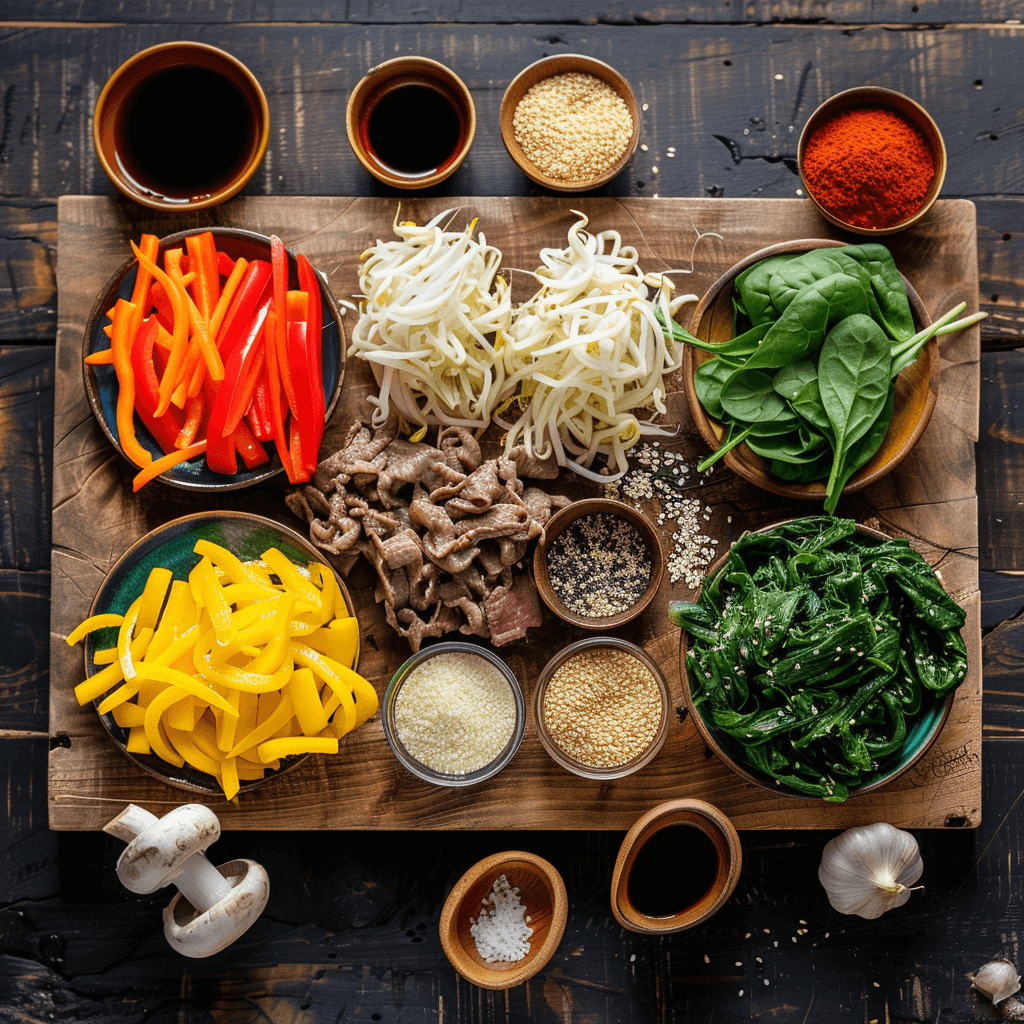
The Star: Dangmyeon – Choosing the Right Korean Glass Noodles
For truly authentic Japchae recipe , dangmyeon noodles are a must. Look for packages labeled “Korean glass noodles” or “sweet potato starch noodles.” Their unique texture is key to Japchae. Don’t confuse them with cellophane noodles, which are thinner and made from different starches.
A Rainbow of Vegetables: Selecting Fresh, Colorful Additions
Vegetables add color, crunch, and vital nutrients to Japchae. Classic choices include carrots, spinach, onions, and bell peppers. Mushrooms, especially shiitake mushrooms, add a wonderful earthy flavor. Feel free to mix and match based on what’s fresh and in season.
Protein Power: Beef and Vegetarian Alternatives for Japchae
Thinly sliced beef, often sirloin, is traditionally used in Japchae. For this recipe, we recommend a cut that is tender and cooks quickly. However, Japchae is incredibly versatile. If you prefer a vegetarian version, simply skip the beef and add more mushrooms or tofu for protein.
Building Flavor: Japchae Seasoning Must-Haves
The magic of Japchae lies in its perfectly balanced seasoning. Soy sauce provides the savory base, while sesame oil adds a nutty aroma and shine. A touch of sweetness, usually from brown sugar or a similar sweetener, rounds out the flavors. Garlic and sometimes a hint of ginger deepen the complexity.
Mastering Japchae Recipe: Your Step-by-Step Cooking Journey
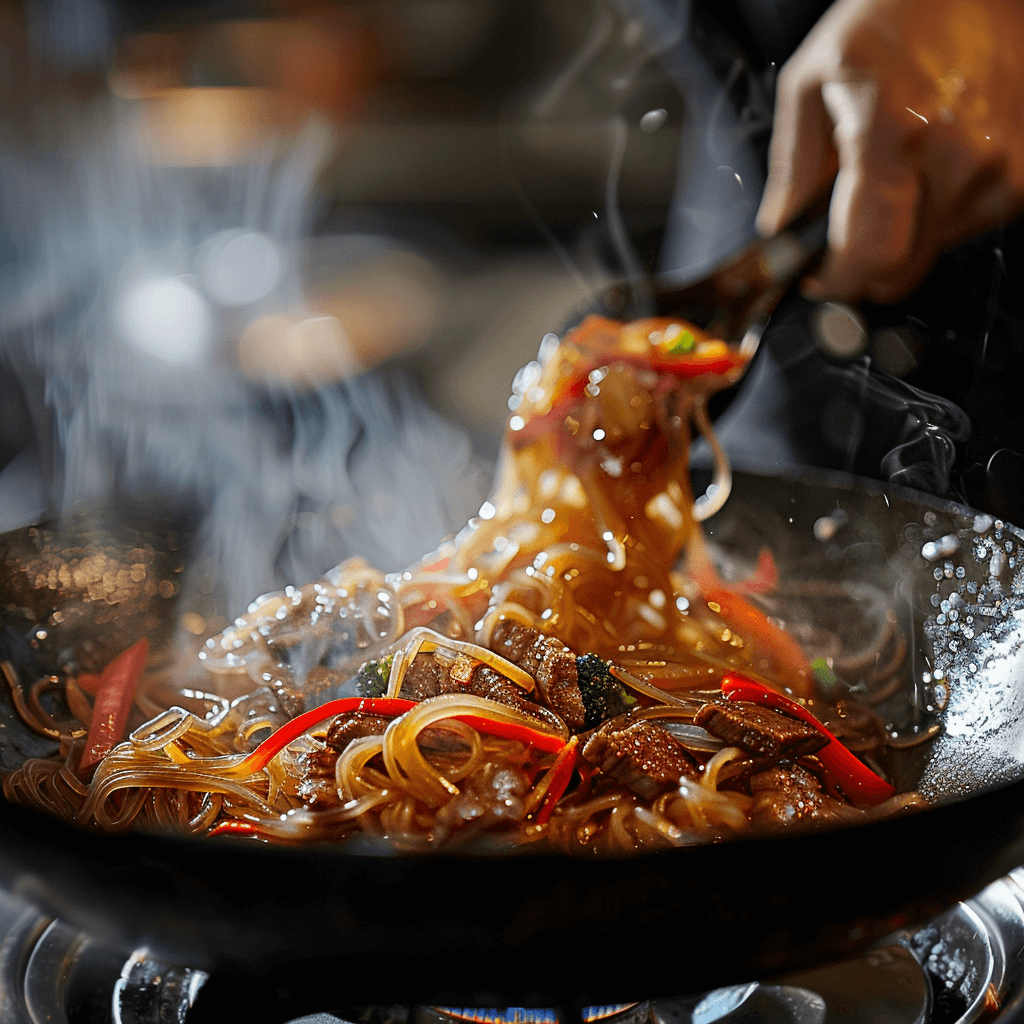
Step 1: Preparing Dangmyeon Noodles for Perfect Japchae Texture
The secret to perfect Japchae noodles is in the soaking. Place the dangmyeon in a bowl and cover them with warm water. Let them soak until they become pliable but still slightly firm to the bite. This step is crucial to avoid mushy noodles later on during stir-frying.
Step 2: Cooking Meat and Vegetables to Japchae Perfection
To keep the vegetables crisp-tender and the beef perfectly cooked, we’ll cook them separately. Stir-fry the beef until just browned and set aside. Then, stir-fry each vegetable individually until they are cooked but still have a bit of bite. This method ensures each component retains its texture and flavor.
Step 3: The Stir-Fry Symphony: Combining Flavors for Authentic Japchae
Now for the fun part – bringing it all together! In a large pan or wok, stir-fry the soaked and drained dangmyeon noodles. Add the cooked beef and vegetables to the pan with the noodles. This is where the magic happens, as all the individual flavors start to meld together.
Step 4: Seasoning Secrets & Serving Your Homemade Japchae
Pour in the Japchae seasoning – soy sauce, sesame oil, sweetener, and garlic. Toss everything together well, making sure the noodles are evenly coated in the sauce and beautifully glossy. Garnish with sesame seeds for a final touch of flavor and visual appeal. Serve warm or at room temperature.
Japchae Chef’s Tips: Elevate Your Korean Glass Noodle Dish
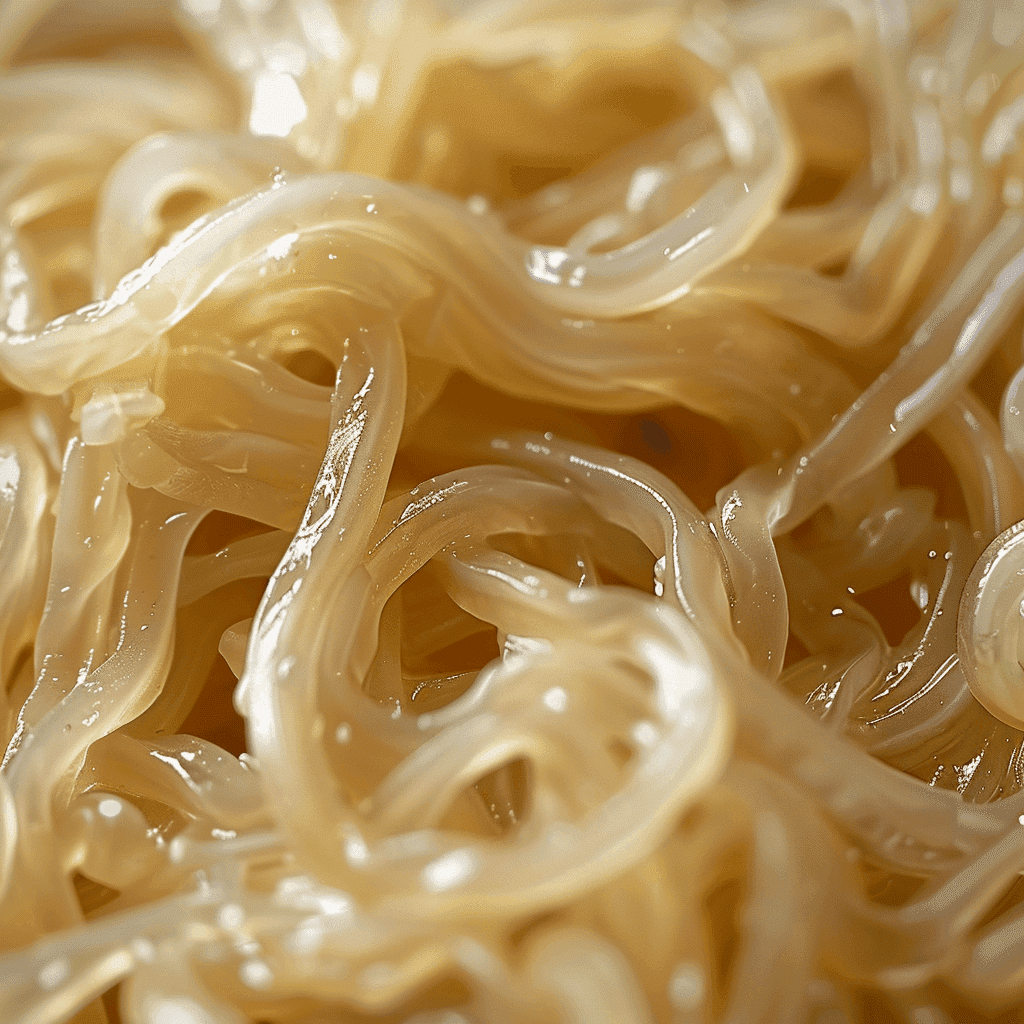
Noodle Know-How: Avoiding Mushy Japchae Noodles
From my kitchen tests, I discovered the soaking time for dangmyeon is not set in stone. It depends on the thickness of your noodles and the water temperature. The key tip: don’t oversoak! They should be flexible but still have a slight firmness before you stir-fry them. If they are too soft after soaking, they’ll likely turn mushy when cooked further.
Vegetable Virtuosity: Cutting for Even Cooking in Japchae
Consistent vegetable cuts are essential for even cooking in Japchae. Slice vegetables like carrots and bell peppers into thin strips or matchsticks. This ensures they cook quickly and evenly in the stir-fry, matching the cooking time of the beef and noodles.
Flavor Balancing Act: Mastering Japchae Seasoning
The balance of sweet and savory in Japchae seasoning is crucial. Start with the recipe’s recommended amounts, but always taste and adjust. If you prefer it sweeter, add a touch more sweetener. For a saltier flavor, add a bit more soy sauce. Remember, good quality soy sauce and sesame oil truly make a difference!
Explore Japchae Recipe Variations: Customize Your Korean Noodles
Veggie Delight: Crafting a Flavorful Vegetarian Japchae
Making vegetarian Japchae is easy and delicious. Omit the beef and boost the vegetable content. Adding more varieties of mushrooms, like oyster or enoki, can enhance the savory, umami flavor. Tofu, either firm or fried, can also be added for protein. You can even try adding eggplanthttps://www.cookscript.com/eggplant-casserole-recipe/ for a richer texture if you enjoy it.
Spice it Up: Adding Heat to Your Japchae Recipe
If you like a bit of spice, Japchae can easily handle it. Stir in a spoonful of gochujang (Korean chili paste) or a pinch of chili flakes along with the seasoning. Start with a small amount and add more to reach your desired level of heat.
Seafood Japchae: A Taste of the Ocean in Korean Noodles
For a different twist, try seafood Japchae. Shrimp or thinly sliced squid can be excellent substitutes for beef. Cook the seafood just until pink and opaque, being careful not to overcook it. The delicate flavor of seafood pairs beautifully with the Japchae noodles and vegetables.
Serving and Storage: Getting the Most from Your Japchae
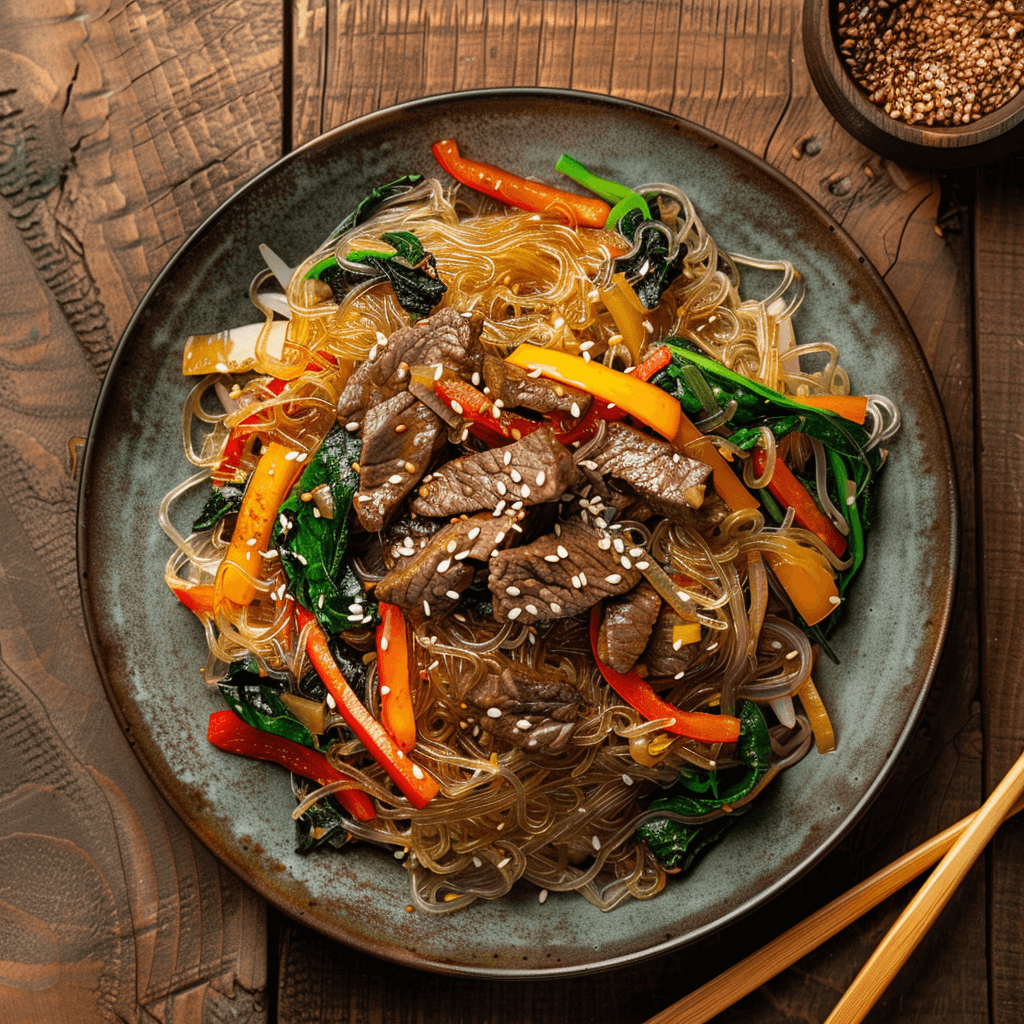
Serving Japchae: Hot, Cold, or Just Right?
Japchae is delicious served warm or at room temperature. It’s often served as a side dish (banchan) in Korean meals, but it’s hearty enough to be a light main course as well. It’s also fantastic for potlucks and gatherings because it travels well.
Keeping it Fresh: Best Ways to Store Leftover Japchae
Leftover Japchae can be stored in an airtight container in the refrigerator for up to 3 days. When reheating, it’s best to stir-fry it briefly in a pan with a touch of oil to prevent the noodles from becoming too dry. Note that the texture of the noodles might change slightly upon reheating, becoming a bit softer.
Japchae FAQs: Your Burning Questions Answered
Can Japchae Be Made Ahead for Easy Meals?
What Kind of Noodles Are Truly Japchae Noodles?
Is Freezing Japchae a Good Idea?
Swapping Vegetables in Japchae: What Works Best?
Dive Deeper into Asian Cuisine: Recipes to Try After Japchae
If you’ve enjoyed making Japchae, why not explore more of the delicious world of Asian cuisine?
Easy Hokkien Noodles Recipe: Wok-Fried Noodles in 30 Minute
Easy Wonton Noodle Soup Recipe: Better Than Takeout!
Rice Paper Dumplings: A Healthy, Gluten-Free Delight
Print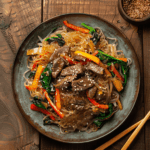
Savory & Slurp-Worthy Japchae: A Taste of Korea in Every Bite
- Total Time: 50 minutes
- Yield: 4 servings 1x
Description
Discover Japchae, Korean glass noodles with vegetables and beef. This easy Japchae recipe brings a delicious and authentic taste of Korea to your kitchen. Learn to make this flavorful and colorful dish at home.
Ingredients
- 1 pound dangmyeon (Korean glass noodles)
- 1 tbsp sesame oil
- 1 pound beef sirloin (thinly sliced)
- 1/4 cup soy sauce
- 2 tbsp brown sugar
- 2 tbsp sesame oil
- 2 cloves garlic (minced)
- 1 small onion (thinly sliced)
- 2 carrots (julienned)
- 2 bell peppers (various colors, julienned)
- 5 ounces fresh spinach (washed)
- 4 ounces shiitake mushrooms (thinly sliced)
- Sesame seeds for garnish
Instructions
Soak Noodles:
- Place dangmyeon in a bowl and cover with warm water. Soak for 15-20 minutes until pliable but slightly firm.
Prepare Beef:
- In a bowl, marinate beef with soy sauce, brown sugar, sesame oil, and minced garlic for 10 minutes.
Cook Beef and Vegetables:
- Stir-fry beef until browned. Set aside. Stir-fry onion, carrots, bell peppers, spinach, and mushrooms separately until tender-crisp. Set aside.
Stir-fry Noodles and Combine:
- Drain noodles. Stir-fry noodles in a large pan with sesame oil until softened. Add beef and vegetables back to the pan.
Season and Serve:
- Season with remaining marinade. Toss well. Garnish with sesame seeds. Serve warm or at room temperature.
- Prep Time: 20 minutes
- Cook Time: 30 minutes
- Category: Main Course
- Cuisine: Korean
Nutrition
- Calories: 500
For more delicious Korean favorites like this Savory & Slurp-Worthy Japchae Recipe, follow us on Pinterest and Facebook.