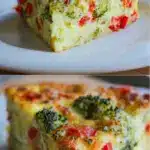
My grandmother used to make an impossible vegetable pie on busy weeknights, pulling a golden, self-crusting marvel out of the oven while I stared in disbelief at the lack of a rolling pin.
You are likely tired of crustless vegetable pie recipes that turn out as gummy, dense omelets or vegetable scrambles with soggy bottoms that fall apart the moment you try to slice them. I promise this recipe forms a tender, structural base all on its own, and you get perfect, clean wedges every single time.
Coming up: the science behind the self-crusting magic and the secret to avoiding a watery center.
Table of Contents
The Magic Behind the Self-Crusting Batter
The genius of an impossible vegetable pie is its seemingly magical batter. When you pour a thin, liquid mixture of eggs, milk, and baking mix over your favorite vegetables and cheese, it feels like a mistake. You assume you are making a soup. But as it bakes, the heavy shredded vegetables and cheeses sink to the bottom of the pie plate, while the lightest particles of the baking mix rise to the top. There, exposed to the direct heat of the oven, those flour particles bond together and fry in the melting butter. A thin, golden crust forms right on top. As it cools and settles, this crust firms up and becomes the structural base when you invert the pie or slice it straight from the dish.
This alchemy is what separates a true impossible vegetable pie from a standard crustless vegetable pie or frittata. Frittatas rely entirely on coagulating eggs for structure, which can turn rubbery if overcooked. A self-crusting vegetable pie uses the starch in the baking mix to tenderize the egg matrix. It is the same brilliant science behind our popular baby lemon impossible pie, where a single batter separates into a spongy cake layer and a creamy custard layer while it bakes.
To get this magic right, you must respect the resting time. When you let the baking mix hydrate in the milk and eggs for just five minutes before pouring, the starches soften. If you skip this, the starch stays raw and sandy, and the batter will not separate cleanly into crust and filling. The hydrating step is the difference between a smooth slice and a grainy texture. You will see the batter thicken slightly, looking like a thin pancake batter. That is exactly when you know the starches are ready to do their job in the oven.
Print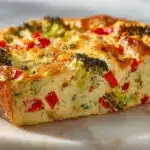
The Magic of Impossible Vegetable Pie: A Self-Crusting Sensation
- Total Time: 1 hour 3 minutes
- Diet: Vegetarian
Description
A savory, self-crusting pie where a simple batter of eggs, milk, and baking mix sinks to the bottom and bakes into a tender crust, while broccoli, bell pepper, and cheddar cheese float to the top. Bake it in a standard pie plate for an easy weeknight dinner.
Ingredients
For the vegetable filling:
– 1 cup broccoli florets, chopped into small pieces
– 1/2 cup red bell pepper, finely diced
– 1/2 cup yellow onion, finely diced
– 1 tbsp olive oil
– 1/2 tsp kosher salt
– 1/4 tsp black pepper
For the pie base:
– 1 cup shredded sharp cheddar cheese
– 1/2 cup shredded Swiss cheese
– 1 cup Bisquick baking mix
– 1 cup whole milk
– 3 large eggs
– 1 tbsp butter for greasing the pie plate
- Prep Time: 15 min
- Rest Time: 5 min
- Cook Time: 43 min
- Category: Main Course
- Method: Baking
- Cuisine: American
Nutrition
- Serving Size: 1 slice
- Calories: 245 kcal
- Sugar: 4 g
- Fat: 15 g
- Saturated Fat: 8 g
- Unsaturated Fat: 6 g
- Trans Fat: 0 g
- Carbohydrates: 18 g
- Fiber: 2 g
- Protein: 12 g
- Cholesterol: 110 mg
Building the Ultimate Flavor Profile
A standard easy vegetable pie recipe usually calls for basic ingredients, but to make an impossible vegetable pie truly memorable, you need to build layers of flavor before the baking even starts. The vegetables you choose and how you treat them dictate the final taste. Broccoli and cheddar are classic, but they need aromatics to support them. A finely diced yellow onion and a handful of minced red bell pepper add a sweet, savory depth that raw vegetables alone cannot achieve.
The biggest mistake people make with a Bisquick vegetable pie is using raw, wet vegetables. Broccoli holds water like a sponge. If you throw raw florets into your batter, they will steam and weep during baking and ruin your crust. You must sauté your vegetables first. Cook the onion and bell pepper in a touch of olive oil until they are soft and translucent, about four minutes. Add the broccoli and a splash of water, cover the pan, and let it steam for two minutes until the florets turn bright green and tender-crisp. Drain any excess liquid and let the vegetables cool. This step concentrates the flavors and prevents a watery center.
Cheese plays a dual role here. Sharp cheddar cheese provides a bold, salty bite that stands up to the mild eggs. Swiss cheese adds a nutty, sweet undertone. Using a cup of sharp cheddar mixed with a half cup of grated Swiss creates a complex flavor profile that tastes intentional. If you want to branch out, try incorporating the savory notes found in our cottage cheese sweet potato bowl by swapping the Swiss for a dry, salty cheese like feta or Parmesan. The salt in the cheese interacts with the baking mix and helps the crust brown.
At-a-Glance Comparison: Pie Methods
| Method | Time | Texture | Effort | Dietary Fit |
|---|---|---|---|---|
| Impossible Vegetable Pie | 63 min total | Tender self-crusting base, soft filling | Very Low (no dough to roll) | Vegetarian, kid-friendly |
| Traditional Crust Veggie Pie | 90+ min | Flaky, buttery double crust | High (chill and roll dough) | Vegan adaptable |
| Crustless Veggie Frittata | 40 min total | Firm, egg-forward slice | Very Low (one pan) | Gluten-free, low-carb |
Mastering the Bake and the Rest
Baking an impossible vegetable pie requires a hot oven and a watchful eye. You will preheat your oven to 400°F. This high heat is necessary to quickly set the top crust and initiate the rising process before the filling has a chance to boil. Grease your pie plate generously with butter or oil. Because the crust forms on top and settles as it cools, a greased plate ensures the pie releases beautifully if you choose to invert it onto a serving platter.
Pour your slightly thickened batter over the sautéed vegetables and cheese. Bake it at 400°F for 25 minutes. At this point, the edges should be puffed and golden brown. Reduce the heat to 350°F and continue baking for another 18 minutes. This two-stage baking process stops the exterior from burning while the dense center cooks through. You will know it is done when the top is a deep golden brown and a knife inserted one inch from the center comes out clean. The center might still jiggle slightly, but it will firm up during the resting phase.
The rest is not optional. Let the pie sit at room temperature for at least 10 minutes before slicing. As the pie cools, the starches in the crust retrograde, meaning they crystallize and firm up. If you slice it hot out of the oven, the filling will run and the crust will tear. Slicing warm gives you a clean wedge that holds its shape on the plate.
If you enjoy savory bakes like this, you will appreciate the texture and structural balance in a classic fish pie recipe, which also relies on a rest period to set the creamy potato topping.
Variations and Smart Substitutions
The beauty of an impossibly easy vegetable pie is how adaptable it is. Once you master the base formula of one cup of baking mix, one cup of milk, and three eggs, the fillings are entirely up to you. You can swap broccoli for cauliflower, or use a dark leafy green like spinach. If using spinach, sauté it until completely wilted and squeeze it dry in a kitchen towel. This keeps excess moisture from ruining your pie. A mixture of zucchini and mushrooms works beautifully too, but both vegetables must be cooked down to release their water before they hit the pie plate.
For a heartier meal, you can add cooked, crumbled sausage or diced ham to the vegetable layer. The heavy proteins sink alongside the vegetables, so it becomes a complete meal. If you need to make an impossible vegetable pie without Bisquick, you can create your own baking mix by combining one cup of all-purpose flour with one and a half teaspoons of baking powder, half a teaspoon of salt, and two tablespoons of cold butter cut into the flour. Add an extra tablespoon of melted butter to the wet ingredients to replicate the fat content.
If you love the concept of a self-crusting Bisquick vegetable pie, you can apply the same technique to other flavor profiles. The texture is similar to the comforting, thick base found in our chicken pot pie soup, where starch and dairy combine to create a velvety texture. For a sweeter application, the airy, structural crumb of our hokkaido chiffon cupcakes demonstrates how baking science transforms simple batters into light structures.
Frequently Asked Questions
Can you put frozen vegetables in a pie?
You can use frozen vegetables, but you must thaw and drain them completely first. Frozen broccoli and spinach hold a massive amount of ice crystals. If you add them directly from the freezer, they will weep water during baking and ruin the self-crusting batter. Thaw them in a sieve, press out the liquid, and pat dry.
How to make an impossible pie?
To make an impossible vegetable pie, you mix eggs, milk, and a baking mix like Bisquick to create a thin batter. Pour this batter over sautéed vegetables and grated cheese in a greased pie plate. The batter sinks and forms a crust as it bakes at 400°F, then finishes at 350°F until golden.
What does Impossible Pie taste like?
An impossible vegetable pie tastes like a cross between a savory quiche and a thick slice of cornbread. The bottom layer is creamy and dense with melted cheese and tender vegetables, while the top layer is a soft, savory crust that soaks up the flavors of the filling.
Can I make impossible vegetable pie without Bisquick?
Yes, you can make it without Bisquick. Combine one cup of all-purpose flour, one and a half teaspoons of baking powder, and half a teaspoon of salt to replace the Bisquick. Cut in two tablespoons of cold butter to mimic the fat in the commercial mix. Add the dry mixture to your eggs and milk as normal.
Conclusion
The impossible vegetable pie remains one of the most satisfying baking tricks to keep in your back pocket. By letting the oven do the work of forming the crust, you skip the rolling pin and still get a structurally sound slice that holds its own on the dinner table.
Bookmark this for your next Sunday dinner or a busy weeknight meal when you want comfort food without the fuss of a traditional pastry crust.
For more recipes like impossible vegetable pie, follow us on Facebook and Pinterest for cozy casserole inspiration.
More recipes in this series: