The first time I tasted Grilled Octopus with Red Pepper Glaze, I was sitting at a tiny waterfront taverna in the Peloponnese, watching the cook drop a copper coin into a bubbling pot. I thought I had misread the scene entirely. Turns out, that coin was doing something genuinely useful, and that plate of smoky, glossy octopus with its sweet-sharp pepper sauce changed every assumption I had about cooking seafood at home. The good news is that this dish, once shrouded in restaurant mystery, is completely achievable in your own kitchen with a little patience and the right technique.
What makes this recipe worth your time is the combination of a slow, gentle braise followed by a scorching few minutes on the grill. The braising melts the tough muscle fibers into something almost buttery, while the grill adds the kind of char and crackle that no oven can replicate. The red pepper glaze, built from roasted bell peppers, smoked paprika, sherry vinegar, and a spoonful of honey, coats every tentacle in a layer of sweet, smoky, faintly tangy flavor.
Table of Contents
The Secret to Genuinely Tender Octopus
Octopus has a reputation for being rubbery, and that reputation is almost entirely the fault of skipping the tenderizing step. Once you understand what is happening on a textural level, you will never fear this ingredient again.
Why Braising Comes Before Grilling
Octopus muscle is dense and tightly wound. A direct blast of high heat seizes those muscles quickly and leaves you chewing through something that feels closer to rubber than to seafood. The fix is a low, slow braise in barely simmering water with aromatics. During this time, the tough collagen threads in the tentacles break down into gelatin, which is what gives properly cooked octopus that silky, yielding bite.
For this grilled octopus recipe, the braise runs for about 75 to 80 minutes. You want the water to stay just below a simmer, with occasional small bubbles breaking the surface rather than a rolling boil. A rolling boil bounces the octopus around aggressively, which can make the outer layer rubbery even as the interior softens.
Building Flavor Into the Braise
Do not skip the aromatics in the braising liquid. A bay leaf, a few sprigs of fresh thyme, half a lemon squeezed in and then dropped in whole, a smashed garlic clove, and a good pinch of sea salt all infuse the octopus with a baseline of Mediterranean flavor before the glaze ever touches it. The braising liquid itself will turn a deep purplish red from the octopus skin, which is perfectly normal.
To test for doneness, insert a thin skewer or the tip of a paring knife into the thickest part of a tentacle. It should slide in with almost no resistance, the way it would through a ripe avocado. If you feel any springback, give it another 10 minutes and test again.
The Penny Trick: Fact or Kitchen Folklore?
The penny trick is one of those techniques that gets passed down through Mediterranean cooking traditions. The idea is that copper from the coin reacts with the proteins in the octopus, helping to tenderize it. Food science writers have been skeptical, and honestly the evidence is mixed. What the penny likely does is keep the water temperature slightly more stable by acting as a small heat diffuser at the base of the pot. Whether or not the copper chemistry is real, the braising technique itself is the true hero here, and a good heavy-bottomed pot will serve you just as well.
Print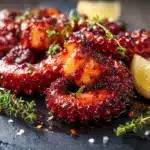
Grilled Octopus with Red Pepper Glaze: Tender, Charred, and Utterly Irresistible
- Total Time: 1 hour 45 minutes
Description
Grilled octopus braised until tender, then finished on a hot grill and brushed with a smoky, sweet red pepper glaze made from roasted bell peppers, smoked paprika, sherry vinegar, and honey. A Mediterranean-style dish that works as an impressive appetizer or a full main course.
Ingredients
For the octopus:
2 lbs whole octopus (cleaned, thawed if frozen)
1 lemon (halved, one half juiced, one half dropped into the pot)
3 garlic cloves (smashed)
3 sprigs fresh thyme
2 bay leaves
1 teaspoon sea salt
2 tablespoons olive oil (for brushing before grilling)
For the red pepper glaze:
2 large red bell peppers (roasted, peeled, and seeded)
3 garlic cloves (roasted or sauteed in olive oil)
1 teaspoon smoked paprika
1 tablespoon sherry vinegar
1 tablespoon honey
3 tablespoons olive oil
Sea salt to taste
- Prep Time: 15 min
- Cook Time: 90 min
- Category: Appetizer
- Method: Grilling, Stovetop
- Cuisine: Mediterranean
Nutrition
- Serving Size: 1 portion (roughly 2 to 3 tentacles)
- Calories: 280 kcal
- Sugar: 6 g
- Fat: 14 g
- Saturated Fat: 2 g
- Unsaturated Fat: 12 g
- Trans Fat: 0 g
- Carbohydrates: 12 g
- Fiber: 1 g
- Protein: 26 g
- Cholesterol: 110 mg
Making the Red Pepper Glaze
The red pepper glaze is what transforms a good grilled octopus recipe into something genuinely memorable. It sits halfway between a romesco and a barbecue glaze, with roasted red bell peppers at its core and a few well-chosen supporting ingredients that give it depth without complexity.
Roasting the Peppers
You can use jarred roasted red peppers in a pinch, and this recipe will still taste excellent. But if you have 20 minutes, roasting your own bell peppers directly over a gas flame or under a broiler adds a layer of bittersweet smokiness that jarred peppers simply cannot match. Hold the peppers with tongs over the flame, rotating them until the skin is blackened and blistered all over. Transfer them to a bowl, cover tightly with plastic wrap, and let them steam for 10 minutes. The skins will slip off easily, and what remains is soft, sweet, slightly smoky pepper flesh with a depth that makes the glaze sing.
Building the Glaze
Once your peppers are peeled and seeded, blend them with the following into a smooth, glossy sauce:
- 2 large roasted red bell peppers (roughly 200g of flesh)
- 3 garlic cloves (roasted alongside the peppers or sautéed briefly in olive oil)
- 1 teaspoon smoked paprika
- 1 tablespoon sherry vinegar
- 1 tablespoon honey
- 3 tablespoons good-quality olive oil
- Sea salt to taste
Blend until smooth, then taste. The glaze should be sweet up front, with a faint tang from the vinegar and a lingering warmth from the paprika. If it tastes flat, add a few more drops of sherry vinegar. If it tastes sharp, a small extra drizzle of honey will round it out. Transfer it to a small saucepan and warm it gently before you start grilling, so it is fluid enough to brush easily over the tentacles.
If you enjoy bold, layered sauces like this one, you might also appreciate this korean bbq sauce recipe, which uses a similar sweet-savory-acid balance to coat grilled proteins.
Getting the Consistency Right
The glaze should coat the back of a spoon lightly but not thickly. Too thick, and it will scorch on the grill before the octopus has time to char properly. Too thin, and it runs straight off the tentacles. If yours is too thin after blending, simmer it in the saucepan for 3 to 5 minutes until it reduces slightly. If it is too thick, whisk in another tablespoon of olive oil.
Grilling the Octopus: Technique and Timing
This is the step that makes the whole dish. A properly braised octopus will grill beautifully in just 4 to 6 minutes, picking up char marks and a crackled exterior while staying perfectly tender inside. The smell when the tentacles hit the hot grates, that salty, slightly sweet scorch, is one of the best aromas a grill can produce.
Preparing the Octopus for the Grill
After braising, transfer the octopus to a cutting board and let it rest for at least 10 minutes. It will look a little deflated and quite purple-grey at this stage, which is normal. Pat it dry thoroughly with paper towels. Moisture on the surface will steam the octopus instead of charring it, which robs you of that essential crackle. Cut the tentacles away from the head at the base. If the head is large, you can slice it open and grill it flat. Brush everything lightly with olive oil and season with sea salt.
Temperature and Timing
Your grill should be screaming hot, at least 450°F to 500°F if you have a thermometer on your gas grill, or until the coals are white-grey with a visible red glow underneath. Place the tentacles directly on the grates. You are looking for deep char marks on each side, which takes about 2 to 3 minutes per side. Do not move them once they are down. Let the grill do the work, and resist the urge to check too early.
In the last minute of cooking, brush the tentacles generously with the warm red pepper glaze. The sugars in the honey will caramelize quickly, creating a shiny, sticky coating with a faint char at the edges. Remove the octopus from the grill and give it one final brush of glaze while it is still hot.
For a refreshing side dish that cuts through the richness of the glaze, this spicy cucumber salad recipe is an excellent pairing, crisp and cool against the smoky tentacles.
Plating and Serving
Arrange the tentacles on a warm plate, overlapping them slightly so the glaze pools attractively. A scatter of fresh thyme leaves, a few flakes of sea salt, and a wedge of lemon on the side are all you need. Some cooks add a spoonful of aioli or a small smear of romesco beneath the tentacles for a richer presentation, and that combination works beautifully if you want to serve this as a dinner party appetizer.
Flavor Variations and Serving Ideas
Once you have mastered the core technique for this charred octopus with pepper glaze, there are several directions you can take it depending on the occasion and your pantry.
Adding Heat to the Glaze
If you enjoy a spicier profile, stir a pinch of cayenne or a teaspoon of your favorite chili paste into the red pepper glaze before warming it. The heat plays well against the sweetness of the honey and the smoke of the paprika. For a quick homemade heat source, this easy chili oil recipe makes a beautiful finishing drizzle over the plated octopus.
Serving as a Main Course
For four servings as a main course, pair the octopus with:
- Crusty sourdough to soak up the extra glaze
- Warm white beans dressed with lemon and olive oil
- Roasted baby potatoes with herbs
- A simple green salad with a sherry vinegar dressing
Serving as an Appetizer
Cut the tentacles into bite-sized pieces and serve them on small plates with a ramekin of extra glaze on the side for dipping. This format works well for a Mediterranean-style mezze spread alongside olives, hummus, and good bread. The octopus with red pepper sauce travels well to the appetizer context because the glaze keeps the pieces moist even as they cool slightly.
Make-Ahead Strategy
The braised octopus can be prepared up to two days ahead. After braising, let it cool completely in its cooking liquid, then refrigerate it in a sealed container. The liquid helps keep the tentacles moist. When you are ready to serve, pat dry, brush with oil, and grill as directed. The glaze can also be made three days ahead and kept refrigerated, then gently rewarmed before use. This flexibility makes grilled octopus a genuinely practical choice for entertaining.
| Component | Make Ahead | Storage |
|---|---|---|
| Braised octopus | Up to 2 days | Refrigerated in braising liquid |
| Red pepper glaze | Up to 3 days | Refrigerated in sealed jar |
| Finished dish | Best served fresh | Within 1 hour of grilling |
Frequently Asked Questions
What does the penny do in the recipe?
The penny trick is a traditional Mediterranean technique where a copper coin is added to the braising water. The belief is that copper ions help tenderize the octopus by interacting with its proteins. The scientific evidence for this is not definitive, but the practice is harmless and fun to keep. The most important factor for tender octopus remains a slow, gentle braise at a low temperature for enough time.
How do I know when the octopus is done?
The best test is to insert a thin skewer or the tip of a small knife into the thickest part of a tentacle. If it slides in with very little resistance, the octopus is ready. You can also feel the texture through the pot, as a properly braised tentacle will feel soft and slightly springy when pressed with a spoon, not firm or bouncy. Expect this to take 75 to 85 minutes for a 2-pound octopus.
Can I use a different oil for the red pepper glaze?
Olive oil is the most compatible choice because its grassy, slightly fruity flavor pairs naturally with roasted peppers, garlic, and smoked paprika. In a pinch, a neutral oil like avocado oil works without changing the flavor dramatically. Avoid strongly flavored oils like toasted sesame oil, as they can overwhelm the delicate sweetness of the roasted peppers and pull the glaze in a different flavor direction.
Can I make this recipe without a grill?
Yes. A cast iron grill pan heated over high heat for at least 5 minutes will give you good char marks and a similar smoky crust. The sear will not be quite as deep as an outdoor grill, but the result is still excellent. Make sure your kitchen is well ventilated, as the glaze will smoke noticeably in the pan. A broiler set to high with the rack close to the element is another option, though you get less direct char and more overall browning.
Conclusion
Grilled Octopus with Red Pepper Glaze is the kind of recipe that earns its place in your regular rotation the moment you taste it. It starts with a humble braise, the same patient technique used in that small Greek taverna where I first encountered this dish, and it ends with a few fiery minutes on the grill and a glossy, smoky-sweet glaze that makes every tentacle look and taste extraordinary. The technique demystifies octopus completely and proves that tender, restaurant-quality results are well within reach at home.
Give this one a try this weekend. It is a brilliant centerpiece for a relaxed dinner with friends, and the make-ahead steps mean you can enjoy the company instead of being chained to the stove.
For more recipes like Grilled Octopus with Red Pepper Glaze, follow us on Facebook and Pinterest for Mediterranean seafood and grilling inspiration.