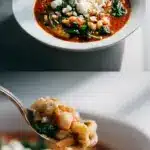
Vegetarian Lasagna Soup began as a desperate Tuesday experiment with a broken noodle box and a craving for comfort. I expected a watery disappointment, but what came together in the pot was rich and deeply comforting.
Traditional lasagna takes over an hour and leaves you with a soggy bottom layer and a sink full of dishes. This version captures the cheesy, herbaceous joy of the classic dish while skipping the layering hassle entirely.
This guide covers choosing the right noodles, building a flavorful tomato broth, and getting the ricotta swirl right without turning your soup into a grainy mess.
Table of Contents
The magic of one pot lasagna soup
There is a specific kind of exhaustion that hits on a Wednesday evening. You want something warming and substantial, but the thought of boiling noodles, mixing cheese, layering a casserole, and baking it for an hour feels impossible. That is exactly the problem this soup solves.
By taking the parts of a baked lasagna and turning them into a simmering pot of broth, you get all the flavor without the labor.
The concept is simple. You build a robust, savory base using aromatics, crushed tomatoes, and vegetable broth. Then, instead of carefully layering sheets of pasta, you toss in broken lasagna noodles. As they cook directly in the broth, they release their starches, which thickens the liquid into something close to a sauce. It is a technique borrowed from rustic Italian cooking, where pasta is often cooked in broth rather than separate water. This way, the pasta absorbs flavor as it cooks. The easy homemade chicken and noodles recipe uses a similar technique where the starch from the noodles creates the broth’s body.
But the real star here is the cheese. When you serve this soup, you dollop fresh ricotta, shredded mozzarella, and grated parmesan right into the bowl. The hot soup softens the cheeses instantly, creating those gooey, stretchy strings we all secretly crave when eating a baked lasagna. You get the texture of a baked casserole in a fraction of the time.
This one pot approach has another major benefit: cleanup. You use a single large pot or Dutch oven. No colander, no baking dish. That is what makes this work for weeknights. If you enjoy comforting soups like our chicken pot pie soup, you will like this one too.
Print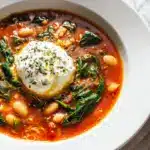
Vegetarian Lasagna Soup: One Pot, 38 Minutes
- Total Time: 38 min
- Yield: 6 servings 1x
- Diet: Vegetarian
Description
This recipe combines broken lasagna noodles, a rich tomato broth, and a trio of cheeses for a comforting meal. It skips the baking step for a quick weeknight dinner.
Ingredients
For the soup base:
2 tablespoons olive oil
1 medium yellow onion (finely diced)
2 medium carrots (peeled and finely diced)
1 medium zucchini (finely diced)
3 cloves garlic (minced)
1 teaspoon Italian seasoning
1/4 teaspoon red pepper flakes
2 tablespoons tomato paste
1 can (28 ounces) crushed tomatoes
6 cups vegetable broth
1 can (15 ounces) white beans (rinsed and drained)
2 cups baby spinach
1/4 teaspoon salt
1/4 teaspoon black pepper
For serving:
8 ounces lasagna noodles (broken into pieces)
1 cup ricotta cheese
1 cup mozzarella cheese (shredded)
1/2 cup parmesan cheese (grated)
Fresh basil leaves
Instructions
1. In a large pot or Dutch oven, heat the olive oil over medium heat. Add the diced onion, carrots, and zucchini. Cook until softened, about 5 minutes.
2. Add the minced garlic, Italian seasoning, and red pepper flakes. Stir for one minute until fragrant. Stir in the tomato paste and cook for two minutes until it darkens slightly.
3. Pour in the crushed tomatoes and vegetable broth. Add the white beans, salt, and pepper. Bring the mixture to a boil, then reduce the heat to low.
4. Add the broken lasagna noodles to the pot. Simmer for 10 to 12 minutes, stirring occasionally, until the noodles are al dente.
5. Stir in the baby spinach and cook for one minute until wilted. Remove the pot from the heat.
6. In a small bowl, mix the ricotta with a tablespoon of hot soup broth to temper it.
7. Ladle the hot soup into bowls. Top each bowl with a dollop of the tempered ricotta, shredded mozzarella, and grated parmesan.
8. Garnish with fresh basil leaves and serve immediately with crusty bread.
Notes
Store leftover soup in the refrigerator for up to 4 days. Keep the noodles separate from the broth to prevent them from getting mushy.
You can use frozen spinach instead of fresh. Thaw and squeeze out the excess water before adding it to the pot.
For a smoother broth, blend half of the soup before adding the noodles back in.
To make this vegan, substitute the ricotta with blended cashews and use vegan mozzarella.
- Prep Time: 10 min
- Cook Time: 28 min
- Category: Main Course
- Method: Stovetop
- Cuisine: Italian
Nutrition
- Serving Size: 1 bowl
- Calories: 320
- Sugar: 9 g
- Sodium: 680 mg
- Fat: 12 g
- Saturated Fat: 4 g
- Unsaturated Fat: 7 g
- Trans Fat: 0 g
- Carbohydrates: 38 g
- Fiber: 7 g
- Protein: 14 g
- Cholesterol: 15 mg
Building the perfect flavor base
A great soup starts with a great foundation. For this meatless lasagna soup, that means treating your aromatics and tomatoes with respect. Begin by heating a generous glug of olive oil in your pot. Add finely diced onions, carrots, and celery. This classic soffritto builds the savory backbone. Cook them slowly until the onions turn translucent and the carrots soften. You want to draw out their natural sweetness before adding any liquid. Add minced garlic and a pinch of red pepper flakes, stirring until the garlic is fragrant.
Next comes the tomato layer. Do not skip this step. You will use a combination of crushed tomatoes and tomato paste. The crushed tomatoes provide the bulk of the sauce and add a bright, acidic base. But the tomato paste is the real workhorse here. You must cook the tomato paste in the oil for a few minutes until it darkens slightly. This toasting process removes the metallic, raw edge and brings out a concentrated, sweet tomato flavor. It is the secret to making a vegetable broth taste rich and meaty.
Once your tomato base is ready, pour in the vegetable broth and add your dried Italian seasoning. The dried herbs rehydrate in the liquid and flavor the whole pot with oregano, basil, and thyme. If you have time, homemade broth takes this up a notch, but a good store-bought broth works well. Let the mixture come to a lively simmer before adding your noodles. The liquid should taste distinctly of tomatoes and herbs, savory but still light enough to be a soup.
Choosing your noodles and vegetables
The pasta is what defines this dish. You need actual lasagna noodles for that wide, flat shape. Do not use curly-edged noodles, as they make eating the soup awkward. Instead, look for flat sheets. Mini lasagna noodles, sometimes called mini mafaldine, are ideal if you can find them. They are the perfect size for a spoon and require no breaking.
If you cannot find mini noodles, take standard flat lasagna sheets and break them into rough shards. Do not worry about uniformity. Irregular pieces actually make the soup more interesting to eat. You can use a similar starchy noodle approach if you enjoy our laksa noodle soup recipe. Add the broken noodle pieces directly to the simmering broth. Cook them until they are al dente, usually around ten minutes. They will continue to soften slightly in the residual heat.
Beyond pasta, this soup is a great vehicle for vegetables. Finely diced zucchini and baby spinach are my favorites here. The zucchini adds a tender bite that mimics the texture of meat. Add it at the same time as the noodles so it cooks down and absorbs the tomato broth. The spinach goes in at the very end. You want it to wilt gently in the hot liquid rather than overcook into a gray mush. For a protein boost, white beans or red lentils work well too. They add substance and make the meal more filling. If you love a vegetable-heavy approach, our impossible vegetable pie uses similar techniques.
Here are common mistakes to avoid when making this soup:
- Cook the noodles just to al dente. They keep softening in the hot broth, so test a piece a minute early.
- Keep the cheeses in bowls for individual serving. Melting ricotta directly in boiling soup makes it grainy and stringy.
- Toast two tablespoons of tomato paste until it darkens. Relying only on crushed tomatoes leaves the broth tasting thin.
- Break flat lasagna sheets into rough spoon-sized shards. Curly noodles trap broth and are hard to eat from a bowl.
- Stir in the spinach off the heat just before serving. Adding it too early turns it slimy.
The ricotta swirl: cheese mastery
The best part of serving this soup is the cheese. This is where it stops being tomato soup and starts being lasagna. You want a creamy, rich contrast against the tangy tomato broth. The combination of ricotta, mozzarella, and parmesan is classic for a reason.
Ricotta is the creamy base. Mozzarella is the stretch. Parmesan adds a salty bite. When these three hit the hot liquid, they melt together. The ricotta loosens, creating pockets of warm cheese. The mozzarella gets wonderfully stringy. If you enjoy these flavor pairings, our garlic cheese bombs use a similar cheese blend.
For the best texture, stir a little hot broth into your ricotta before serving. This tempers it, preventing the cheese from seizing up when it hits the bowl.
Customizing your meatless lasagna soup
This recipe is flexible. You can adjust the vegetables and beans based on what you have.
- Try diced carrots or parsnips instead of zucchini.
- Swap spinach for chopped kale.
- Add white beans or red lentils for more protein.
- Add red pepper flakes if you want heat.
- Stir in a splash of heavy cream at the end.
If you enjoy hearty soups, our panish garlic soup is another good one.
Making it ahead and storing leftovers
One of the best things about this soup is how well it keeps. The flavors deepen overnight, so it works well as a make-ahead meal. However, there is a catch with the noodles. If you leave the pasta in the broth overnight, it will absorb all the liquid and become mushy.
To avoid this, store the broth and the noodles separately. If you know you will have leftovers, scoop out the pasta and store it in an airtight container. Store the soup base in the refrigerator for up to four days. When you are ready to eat, add the pasta back to the warm broth.
For longer storage, freeze the broth base without the pasta. It will keep in the freezer for up to three months. When you are ready to serve, thaw the broth overnight in the refrigerator, then cook fresh noodles right in the simmering liquid. For a different creamy texture, our pumpkin soup freezes well too.
For another comforting dinner idea, try our creamy garlic parmesan chicken breast.
Frequently asked questions
What is lasagna soup made of?
Lasagna soup is made of a tomato broth, broken lasagna noodles, aromatics like onion and garlic, and three cheeses. This vegetarian version uses vegetable broth, spinach, and zucchini instead of ground meat.
Does ricotta melt in soup?
Ricotta does not melt like mozzarella. Instead, it softens and becomes creamy when exposed to hot liquid. To get the best texture, dollop the ricotta into the hot soup right before eating. The heat turns it into a warm, creamy sauce.
What are mini lasagna noodles called?
Mini lasagna noodles are called mini mafaldine. They are short, flat pasta strips with ruffled edges. If you cannot find them, simply break standard flat lasagna sheets into rough, bite-sized pieces.
Why make vegetable lasagna soup?
Because it gives you the flavor of baked lasagna without the layering, uses one pot, and helps you use up vegetables.
Conclusion
Vegetarian Lasagna Soup shows you do not need hours to get the flavor of a baked casserole. By skipping the layering and baking, you get all the rich tomato flavor and gooey cheese in a single pot. This recipe solves the soggy bottom problem by cooking the noodles directly in the broth, which naturally thickens it.
Make a small batch tonight and see how quickly it disappears. It is an easy way to get lasagna on the table without the usual effort.
For more recipes like Vegetarian Lasagna Soup, follow us on Facebook and Pinterest for weeknight dinner ideas.
More recipes in this series: