There’s one mistake buried in every bad japchae bowl, and it happens before you add a single ingredient.
You’ve probably ended up with tangled clumps of glass noodles that taste bland and oily. This 35-minute fix gives you chewy, separate strands coated in a savory soy-sesame glaze.
You’ll walk away with the right way to prep dangmyeon, a one-pan workflow, and a vegan option that doesn’t sacrifice depth.
Table of Contents
Why This Japchae Bowl Recipe Works
Perfectly Chewy Noodles Every Time
Most people boil japchae noodles like spaghetti. That’s exactly where things go wrong. Dangmyeon, made from sweet potato starch, aren’t regular pasta. Boiling them turns them from elegantly chewy to a sticky, waterlogged mess.
I learned this the hard way. My first attempt at a japchae bowl ended with a gummy clump I had to eat with a spoon. The fix: soak the noodles in warm water (around 110°F) for 15 minutes until they soften. Then drain and rinse under cold water to remove excess starch. This stops the cooking process and keeps each strand bouncy and separate.
The real magic happens when you toss them in a hot pan with sesame oil and soy sauce. The glass noodles absorb the savory glaze without getting mushy. Here’s what makes the difference:
- Use sweet potato noodles specifically labeled as dangmyeon
- Soak, never boil, before stir-frying
- Rinse thoroughly after soaking
- Toss with oil immediately to prevent sticking
- Stir-fry for just 2-3 minutes to heat through
That chewy, springy texture is why this japchae bowl works. It’s satisfying in a way that rice or wheat noodles can’t match. And it’s the reason every bite has that distinct, slippery pop.
A Balanced, Customizable Meal in One Bowl
This japchae bowl isn’t a rigid recipe. It’s a template that adapts to what’s in your fridge. Traditionally, it combines beef, spinach, carrots, shiitake mushrooms, bell pepper, onion, and egg, but swap beef for tofu and you’ve got a vegan version that eats like the original.
The sauce is the backbone: soy sauce, sesame oil, garlic, and a touch of sugar balance salty, nutty, and sweet. No specialty ingredients required. Every vegetable is cooked separately to preserve its color and crunch, then tossed together at the end. That’s the authentic Korean method, each ingredient holds its own character.
This approach also makes it a meal prep dream. Cook once, pack four servings, and you have lunch for days. If you enjoy bowl-style meals, a taco shrimp bowl brings a bright, citrusy twist, while a cottage cheese enchilada bowl leans creamy and comforting. But back to japchae: it’s a complete meal with protein, veg, and carbs in every spoonful.
The five color elements, green spinach, orange carrots, white mushrooms, black mushrooms or dark sauce, and yellow egg, aren’t just pretty. They reflect balance and harmony in Korean culinary tradition. Whether you care about symbolism or not, that variety delivers on nutrition and texture.
Print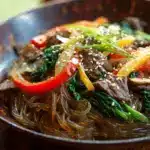
Japchae Bowl: The 35-Minute Korean Comfort Food That’s Worth Every Bite
- Total Time: 35 minutes
Description
Quick Korean japchae bowl with chewy glass noodles made from sweet potato starch, vegetables, and your choice of beef or tofu in a soy-sesame sauce. Ready in 35 minutes and perfect for meal prep.
Ingredients
For the noodles and sauce:
8 ounces (225g) sweet potato noodles (dangmyeon)
2 tablespoons soy sauce (or tamari)
1 tablespoon toasted sesame oil
2 cloves garlic, minced
1 teaspoon sugar (or honey)
¼ teaspoon black pepper
For the vegetables:
5 ounces (140g) fresh spinach
1 medium carrot (about 120g), julienned
4 ounces (115g) shiitake mushrooms, stems removed, sliced
1 small bell pepper (any color), thinly sliced
½ medium onion, thinly sliced
For the protein:
8 ounces (225g) beef sirloin (or ribeye), thinly sliced against the grain (or extra-firm tofu, pressed and cubed)
2 large eggs
For cooking:
1 tablespoon vegetable oil (for cooking)
For garnish:
1 tablespoon toasted sesame seeds, for garnish
Optional:
additional soy sauce and sesame oil for finishing
- Prep Time: 20 min
- Cook Time: 15 min
- Category: Dinner, Main Course
- Method: Stovetop
- Cuisine: Korean
Nutrition
- Serving Size: 1 bowl
- Calories: 430 kcal
- Sugar: 5 g
- Fat: 13 g
- Saturated Fat: 2.5 g
- Unsaturated Fat: 10.5 g
- Trans Fat: 0 g
- Carbohydrates: 59 g
- Fiber: 2 g
- Protein: 19 g
- Cholesterol: 130 mg
Japchae Bowl Ingredients and Preparation
Active Time: 20 minutes Total Time: 35 minutes Yield: 4 servings
For the japchae bowl
- 8 ounces (225g) sweet potato noodles (dangmyeon)
- 2 tablespoons soy sauce (or tamari)
- 1 tablespoon toasted sesame oil
- 2 cloves garlic, minced
- 1 teaspoon sugar (or honey)
- ¼ teaspoon black pepper
- 5 ounces (140g) fresh spinach
- 1 medium carrot (about 120g), julienned
- 4 ounces (115g) shiitake mushrooms, stems removed, sliced
- 8 ounces (225g) beef sirloin (or ribeye), thinly sliced against the grain (or extra-firm tofu, pressed and cubed)
- 2 large eggs
- 1 small bell pepper (any color), thinly sliced
- ½ medium onion, thinly sliced
- 1 tablespoon vegetable oil (for cooking)
- 1 tablespoon toasted sesame seeds, for garnish
- Optional: additional soy sauce and sesame oil for finishing
| Original | Substitute | Notes |
|---|---|---|
| Beef sirloin | Extra-firm tofu (pressed and cubed) | Press 15 min, pan-fry until golden for texture. |
| Shiitake mushrooms | Cremini or white button mushrooms | Same weight, slice thin. |
| Spinach | Kale or Swiss chard | Blanch 1 minute, squeeze dry. |
| Soy sauce | Tamari or coconut aminos | For gluten-free option. |
No dangmyeon? Regular glass noodles made from mung bean or potato starch work, but the chew will be slightly different. If you can’t find toasted sesame oil, regular sesame oil is fine, just add a pinch of toasted sesame seeds to boost flavor.
Key Ingredients for Authentic Flavor
What is japchae made of? At its core, a japchae bowl combines springy glass noodles, a savory-sweet sauce, and a rainbow of individually cooked vegetables and protein. Each ingredient pulls its weight.
Dangmyeon are noodles made from sweet potato starch that give japchae its trademark bounce and translucent look. They stay firm even after stir-frying, unlike wheat noodles that can go limp. The starch resists water absorption, which is why soaking instead of boiling is essential.
Soy sauce and sesame oil form the sauce’s backbone. Soy sauce brings salt and umami, while toasted sesame oil adds nutty depth. A touch of sugar rounds out the salt without making anything sweet. Minced garlic brings warmth and a bit of punch.
Beef adds richness, but tofu does the same job if you press it well and pan-fry until golden. The vegetables (spinach, carrots, shiitake mushrooms, bell pepper, and onion) aren’t just for color. Each one is cooked separately in the authentic method. That keeps the spinach wilted but not mushy, the carrots crisp-tender, and the mushrooms deeply savory. Thin egg strips on top give a soft, custardy contrast.
If you enjoy bowl meals that balance starch, veg, and protein, a cottage cheese sweet potato bowl swaps noodles for naturally sweet roots. For something even quicker, a cheesy broccoli rice bowl brings comfort in half the time.
Prepping Vegetables and Protein
Mise en place is everything here because each component hits the pan alone. Before the wok heats up, line up all your prepped ingredients.
Julienning for even cooking: Cut the carrot and bell pepper into matchsticks about 2 inches long and ⅛-inch thick. Uniform pieces cook at the same speed, so you won’t end up with half-raw crunch. Slice the onion and bell pepper just as thin, separating the onion layers with your fingers.
Mushrooms: Remove shiitake stems (they’re chewy) and slice caps into ¼-inch strips. If using cremini, slice similarly.
Beef or tofu: Slice beef against the grain into thin strips. For tofu, press for 15 minutes, then cube and pat dry. I pan-fry tofu cubes in a little oil until all sides are browned before adding to the final toss.
Egg garnish: Beat the eggs with a pinch of salt, cook in a lightly oiled pan as a thin omelet, then roll it up and slice into thin ribbons.
Spinach: Blanch for 30 seconds, shock in ice water, and squeeze completely dry. This keeps it vibrant green and stops it from watering down the final japchae bowl.
Working this way means every vegetable and protein keeps its own personality, and by the time the noodles hit the pan, you’re just assembling, not scrambling.
How to Make Japchae Bowl Step-by-Step
Cooking the Noodles and Vegetables Separately
Cooking each component alone preserves texture and color. That’s the core of a classic japchae recipe, adapted here for speed. Have all your prepped ingredients lined up before you turn on the heat.
- Soak the noodles. Place the sweet potato noodles (dangmyeon) in a large bowl, cover with warm water (about 110°F), and soak for 15 minutes. Drain, rinse under cold water, and toss immediately with 1 teaspoon sesame oil to prevent sticking.
- Blanch the spinach. Drop spinach into boiling water for 30 seconds, then shock in ice water. Squeeze out every bit of water and set aside.
- Sauté the vegetables. Heat a teaspoon of oil in a large pan over medium-high. Cook the carrot matchsticks for 1–2 minutes until they lose their raw crunch but stay bright orange. Remove. Add the bell pepper and onion together, stir-fry 2 minutes until softened. Remove. Finally, cook the sliced shiitake mushrooms 2–3 minutes until golden and slightly shrunken. Season each batch with just a pinch of salt.
- Cook the protein. Mix the beef (or tofu) with a spoonful of the combined soy-sesame sauce. Sear in the same hot pan for 2–3 minutes until no longer pink on the outside. Tofu cubes need 3–4 minutes until all sides are crisp. The beef should have browned edges.
- Make the egg garnish. Pour the beaten eggs into a lightly oiled nonstick pan over medium-low. Cook without stirring until set, about 2 minutes. Slide out, roll tightly, and slice into thin ribbons.
Cook’s Tip: Stir-fry each vegetable in a single layer. Overloading the pan traps steam and turns everything limp instead of crisp-tender.
When the glass noodles are soft and pliable, they’re ready for assembly, never mushy. Cooking separately means you control each texture. That distinct chew of dangmyeon, the wilted spinach, the snappy carrot, the savory mushroom, the sweet onion, and the silky egg all stand on their own before they come together.
Assembling and Tossing the Bowl
Now the japchae bowl comes together in one big toss. Everything is warm, so the flavors meld quickly.
- Make the finishing sauce. In a small bowl, stir together the soy sauce, toasted sesame oil, minced garlic, sugar, and black pepper until the sugar dissolves. This is the simple umami bomb.
- Combine in a large mixing bowl. Add the drained dangmyeon, all the cooked vegetables, the beef or tofu, and the egg ribbons. Drizzle the sauce over the top.
- Toss gently. Use your hands or two large spoons to lift and turn the ingredients until every noodle is coated. The sesame oil in the sauce keeps the strands from sticking, while the soy sauce and garlic soak into the warm glass noodles. The mixture should look glossy, not wet.
- Finish and serve. Sprinkle toasted sesame seeds over the top and add a final, tiny drizzle of sesame oil if you like. Taste one noodle and adjust with a little more soy or a pinch of sugar if needed. Serve right away or pack into meal prep containers.
Pro Tip: Toss while everything is still warm. Cooling noodles absorb less sauce, so you lose that savory coating that makes each bite pop.
Don’t overmix once the egg strips are in. You want ribbons, not scrambled bits. If the bowl seems dry after tossing, add a splash of warm water and a teaspoon of soy, then toss again. Leftovers keep well in the fridge for 3 days, making this a reliable healthy Korean noodle bowl for busy weeks.
Storage, Troubleshooting & Serving Ideas
How to Store and Reheat Leftovers
A japchae bowl holds up in the fridge longer than most noodle dishes because the dangmyeon stay springy. The key is letting everything cool completely before packing.
| Storage Method | Duration | Instructions |
|---|---|---|
| Refrigerator | Up to 3 days | Transfer to an airtight container once cool. Press plastic wrap directly onto the surface to lock in moisture. |
| Freezer | Not recommended | Thawing turns the glass noodles gummy and the vegetables watery. |
To reheat, skip the microwave if you want that fresh-off-the-wok chew. Spread the noodles and toppings in a skillet with a tablespoon of water. Cover and warm over medium heat for 2–3 minutes, tossing once. The steam revives the sauce and keeps the spinach from drying out. In a pinch, microwave at 50% power for 1 minute, stir, then 30 seconds more. The noodles will soften but lose some bounce.
This dish works hot, room temperature, or cold straight from the fridge. For meal prep, pack the japchae bowl into four containers right after tossing and let them cool on the counter for 15 minutes before sealing. If you’re into prepping multiple bowls for the week, a roasted potato avocado breakfast bowl brings a similar make-ahead ease to mornings.
Common Mistakes and How to Fix Them
Even a simple stir-fry can trip you up. These fixes rescue a batch that’s gone sideways.
| Problem | Solution |
|---|---|
| Soggy noodles | Rinse cooked noodles in cold water and toss with a teaspoon of sesame oil immediately after soaking. Don’t let them sit wet. |
| Mushy vegetables | Cook each vegetable separately over high heat for 1–2 minutes max. A crowded pan steams instead of sears. |
| Bland flavor | Drizzle on 1 extra teaspoon each of soy sauce and sesame oil right before serving. A pinch of sugar balances salt and brings the sauce alive. |
| Noodles sticking together | After draining, use your hands to gently separate strands while coating them in sesame oil. The oil barrier prevents clumping. |
| Disorganized cooking | Line up every prepped vegetable and sauce before you turn on the heat. Having ingredients ready means you’re assembling, not scrambling. |
If your japchae bowl tastes flat, don’t add more salt. Boost the soy-sesame combo instead. For heat, swirl a spoonful of gochujang into the finishing sauce. And if the egg garnish breaks apart while tossing, just fold it in last and accept the scramble; the flavor stays the same.
Japchae Bowl FAQ
What is japchae made of?
A japchae bowl starts with sweet potato starch noodles (dangmyeon), which are soaked, not boiled. The dish combines vegetables like spinach, carrots, shiitake mushrooms, bell pepper, and onion with a protein (beef or tofu) and a simple sauce of soy sauce, sesame oil, garlic, and sugar.
Is japchae a healthy meal?
Yes, this japchae bowl packs vegetables, lean protein, and gluten-free noodles into one dish. The dangmyeon are lower in calories than wheat pasta, and the sesame oil adds heart-healthy fats. Control the sodium by using low-sodium soy sauce and loading up on spinach and mushrooms.
What is the secret to good japchae?
Soak the glass noodles in warm water (110°F) instead of boiling. Boiling makes them waterlogged and sticky. After soaking, rinse with cold water and toss immediately with sesame oil to keep strands separate. That chewy, springy bite is the difference between a good japchae bowl and a gluey mess.
Are you supposed to eat japchae hot or cold?
You can serve a japchae bowl hot, at room temperature, or even chilled. Traditional japchae is often served at room temp for banchan, but warm brings out the sesame aroma. It’s versatile, no need to reheat if you’re packing it for lunch.
How long can I store leftover japchae?
Store a japchae bowl in an airtight container in the fridge for up to 3 days. The noodles stay springy, and the vegetables hold their texture. For best results, press plastic wrap directly onto the surface before sealing. Freezing is not recommended because the noodles turn gummy when thawed.
Can I make japchae in advance?
Yes, you can prep all components of a japchae bowl a day ahead. Cook each vegetable and protein separately, store them in separate containers, and soak the noodles. When ready to serve, toss everything with the sauce in a hot pan for 2–3 minutes. The fresh assembly restores the texture.
How do I reheat japchae without drying it out?
Reheat a japchae bowl in a skillet with a tablespoon of water and a drizzle of sesame oil. Cover and warm over medium heat for 2–3 minutes, tossing once. The steam revives the sauce. Avoid the microwave if possible, but if needed, use 50% power for 1 minute, stir, then 30 seconds more.
Make This Japchae Bowl for Your Weeknight Dinner Rotation
Soaking dangmyeon instead of boiling gives you that signature chewy pop, and cooking each vegetable solo keeps every bite bright and distinct. That savory soy-sesame glaze clinging to bouncy noodles is what makes this japchae bowl worth every minute.
I always double the egg ribbons because they’re my favorite part. I grab a few while assembling. Try it this weekend and let those textures come together in one bowl.
Which vegetable do you pile on the most in your japchae bowl?
For more recipes like japchae bowl, follow us on Facebook and Pinterest for weeknight dinner ideas and easy Korean comfort food inspiration.